In August, 2026, Frozen Commons team visited Mongolia to provide updates on the work progress, follow up on the PhotoVoice, and co-create new knowledge using various creative methods. Read more on activities organized together with local and Indigenous communities.
- Aug 3, 2026
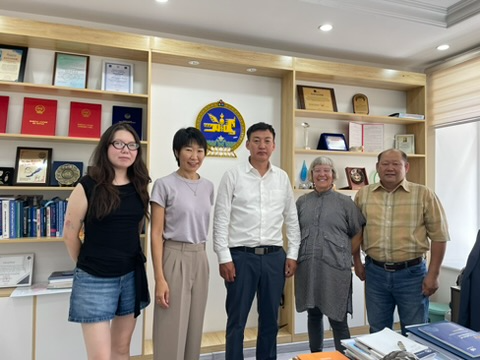
Meeting with Avirmed Dashtseren, the Director of the Institute of Geography and Geoecology, Mongolian Academy of Sciences (IGG MAS). The IGG MAS has been the major partner for the project in Mongolia, providing logistical and administrative support as well as scientific expertise. We shared the project’s progress and discussed next steps for collaboration.
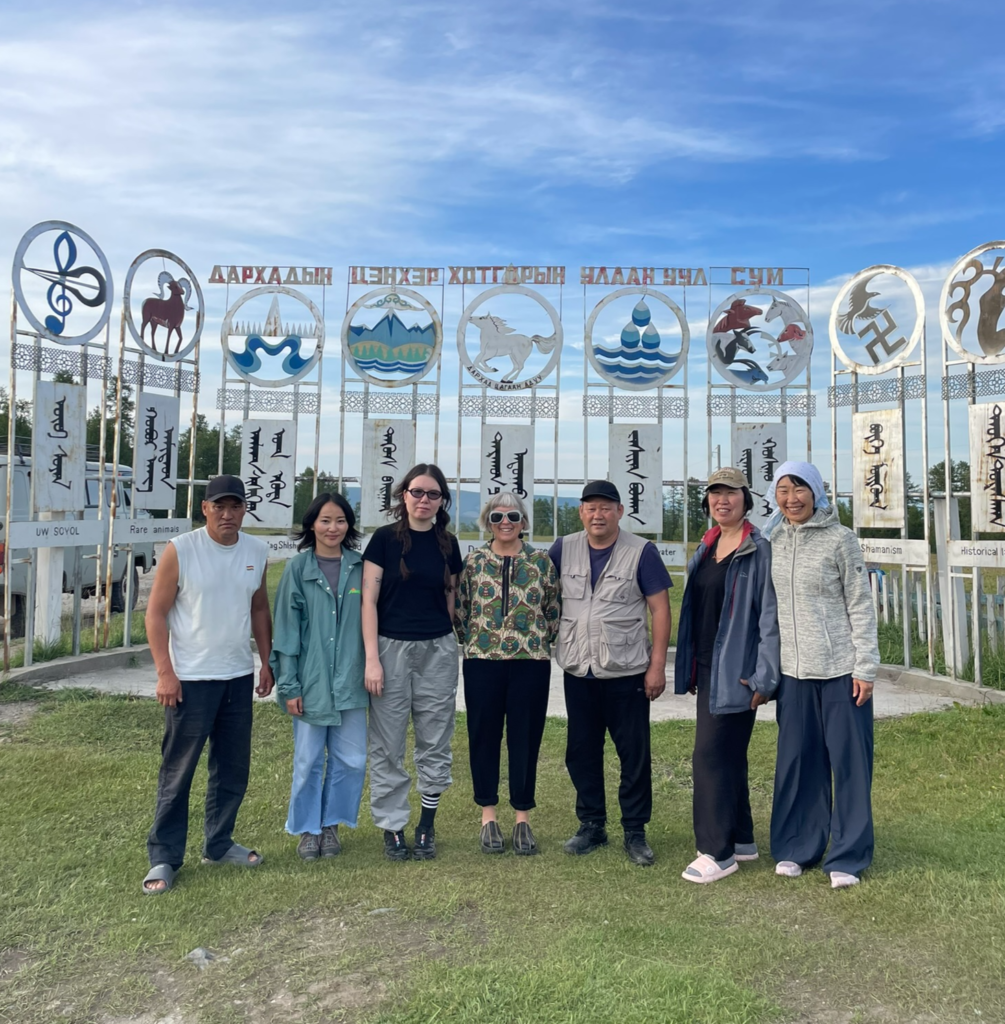
Traveling across Mongolia and the Khovsgol aimag is an important part of the project. Our bodies experience and remember landscapes, roads, and their absence, which allows us to better grasp remoteness, which protects unique landscapes and cultures, while hindering access to health care, educational institutions, and other services available in the villages. We have been fortunate to work with indefatigable driver Ubugun, who navigated the toughest hills and river streams in his UAZ van and fixed any damage that occurred to the car using simple instruments.
Frozen Commons in Ulaanbaatar A knowledge exchange and co-production workshop was organized in Ulaanbaatar on August 4-12, 17-18) where Itelmen, Yup’ik and Mongolian knowledge holders, visual artists, throat singers, and dancers met for the development of the concept of the art-science audio-visual exhibition on Frozen Commons. The program included co-creation of the sounds of the cold, dance practice, development of Indigenous comic books of creation stories, and learning from each other through art practice. The results were audio-recorded at the professional studio and will be edited as the final exhibition description is being developed.
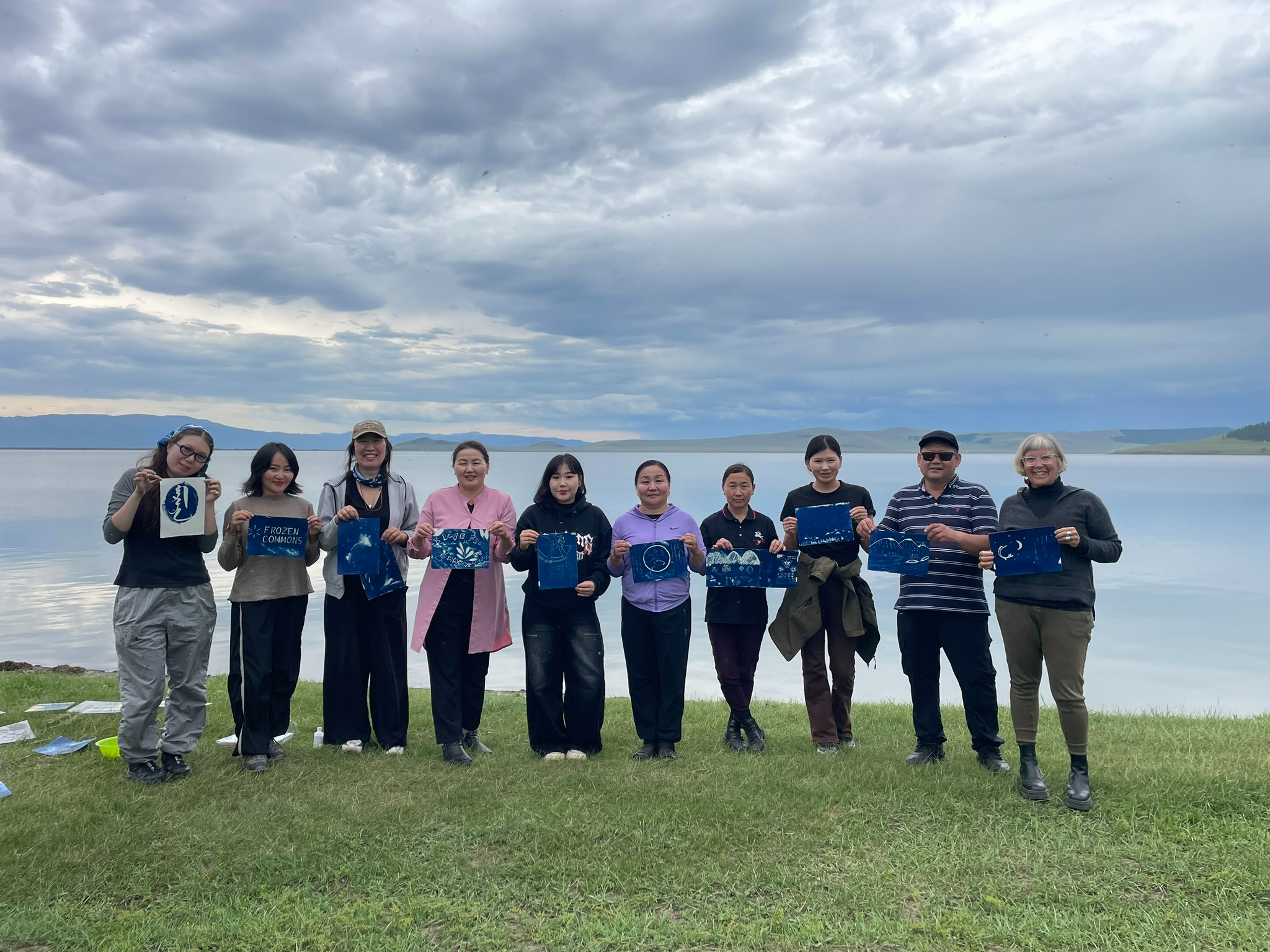
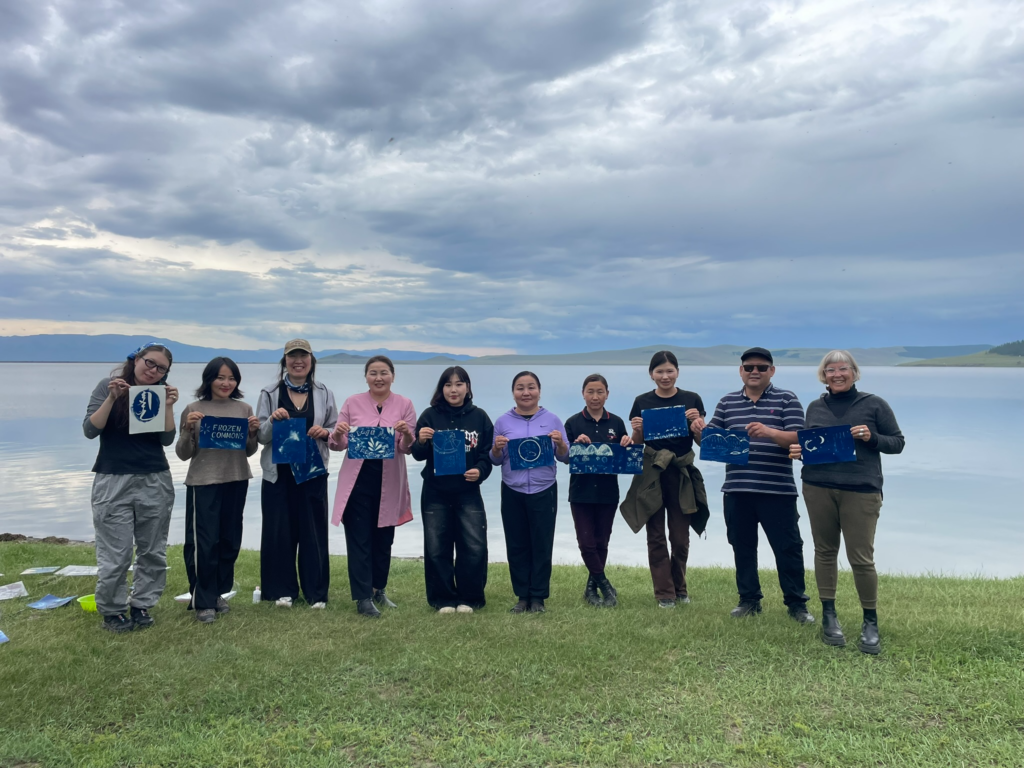
Frozen Commons Photovoice Stories Workshops in Tsagaannuur (August 6-7) and Bayanzurkh (August 9-10) were aimed to collectively interpret stories created through photography and short texts in the local Facebook group over the year. We invited participants who actively shared their photos of snow, ice, and permafrost-related phenomena during this year based on the PhotoVoice workshop organized in 2025. To provide a larger context of their work, Shauna Burnsilver presented the work in progress in Alaska, which also included PhotoVoice. We have also shared plans to use some photos for exhibitions and for creating a zine. We collectively discussed captions to describe the best of what was photographed, where, why, and what those photos meant for people. However, existing language and cultural barriers in this process hinder representation of emotions and values associated with the photo images. To address this issue, we invited designer Maria Ozonova to lead cyanotype workshops in communities to provide tools for creating images that would capture those subjectivities. While participants with drawing skills would paint on transparent sheets, participants with other skills used any available materials, such as flowers, leaves, and other objects, to complement their photos in collaboration with the sun. Experimenting with cyanotypes was an additional way to engage with the creative side of nomadic and Indigenous knowledge.
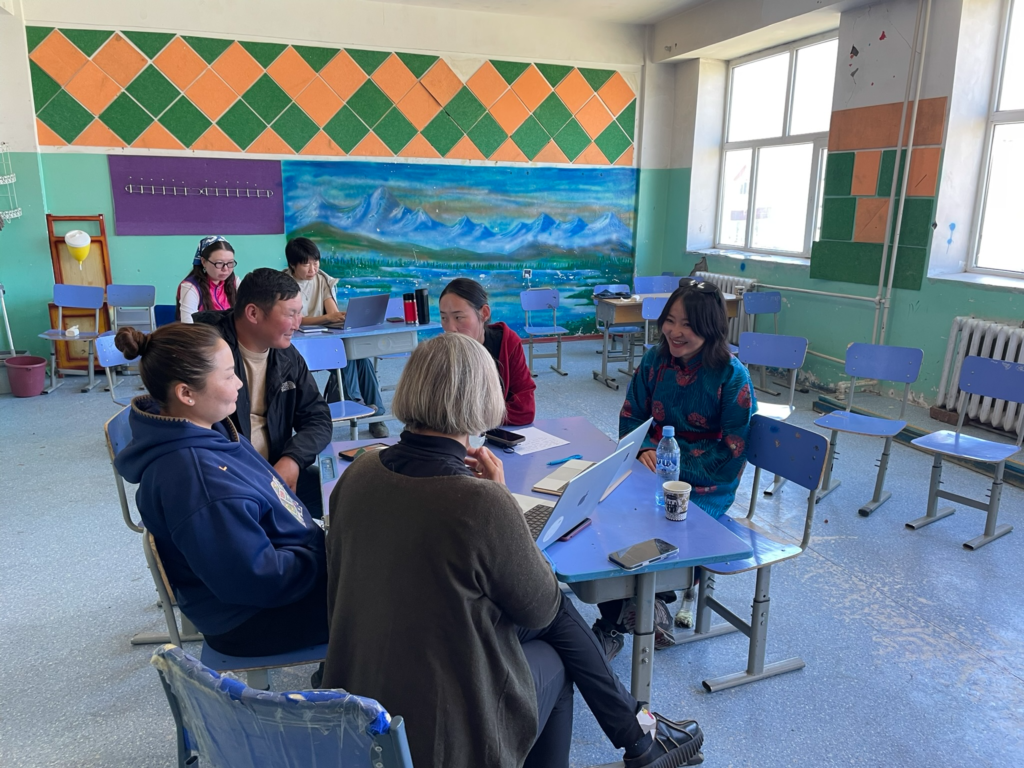
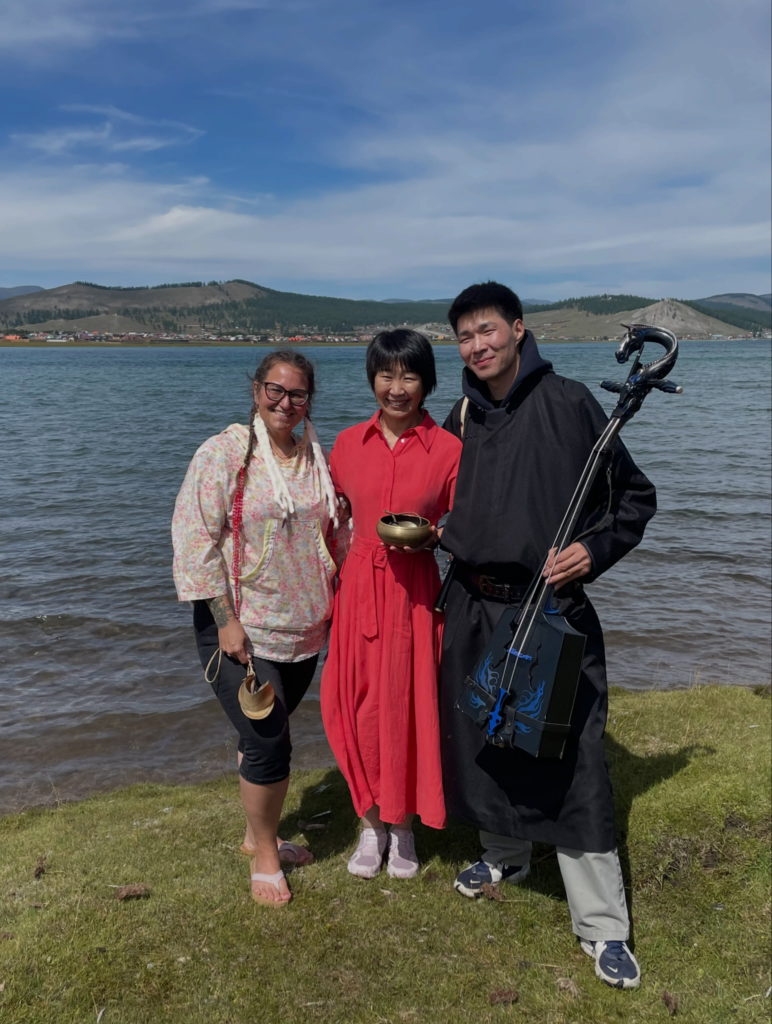
Co-creative Frozen Commons workshop in Murun (August 12-14) and Khatgal (August 15) brought together artists, cultural practitioners, researchers, and community members for four days of shared learning, artistic exchange, and collaborative creation. The program combined presentations, embodied practice, traditional and contemporary arts, collective art making, and outdoor activities in Murun and Khatgal. Designed as a co-creative space, the workshop explored how cultural knowledge, movement, sound, calligraphy, storytelling, and material practice can support new forms of collaboration around the Frozen Commons project for better understanding human-environment relations.
The workshop opened with an ice-breaking session and introductions to the project and participants. The day included a presentation on Frozen Commons made by Dr. Enkh-Amgalan Sandag, who provided the background for the global importance of studying Frozen Commons and its relevance for Mongolia, highlighting the benefits of snow, ice, and permafrost, and the disastrous consequences of their loss for local landscapes and livelihoods.
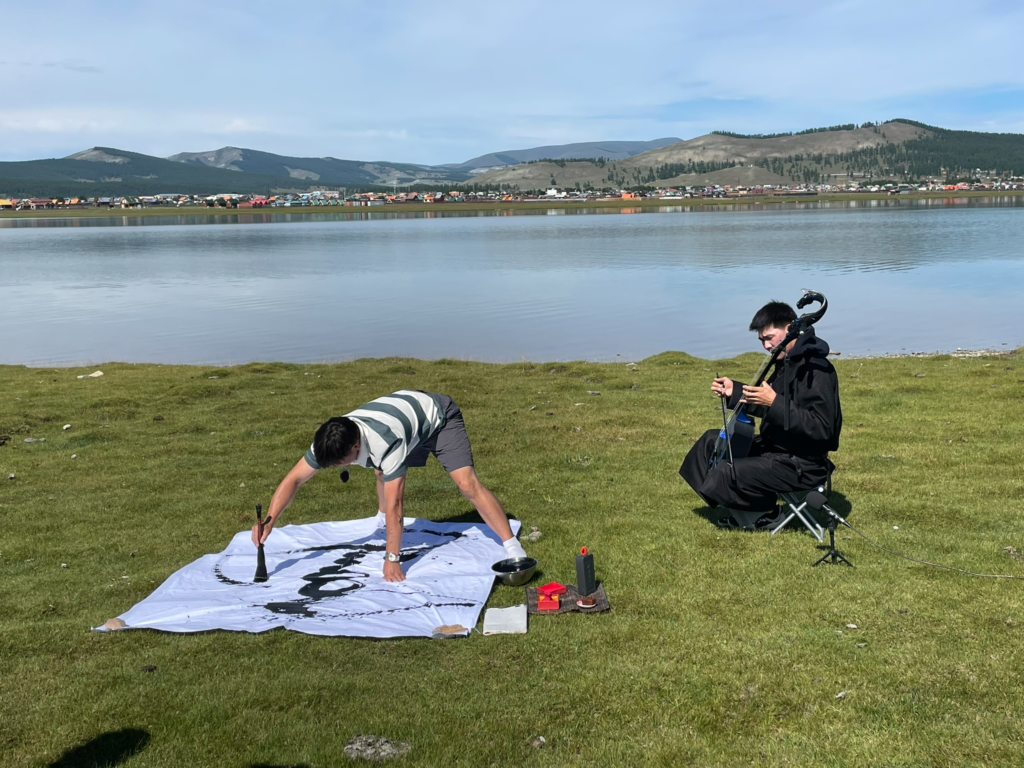
Participants were invited to explore a variety of ways of exploring human-nature relations, such as through the introduction to and master class on throat singing by Bayarbaatar. Hands-on calligraphy practice by Zesmaa, Ishdorj, and Maria Osipova allowed participants to use brushes and tree branches to draw while also learning traditional Mongolian and Cyrillic scripts and engaging in font co-creation activities. Participants also continued collaborative work connected to the ArtSLInK Blanket created in 2025 and ended the day with a riverbank gathering and dinner.
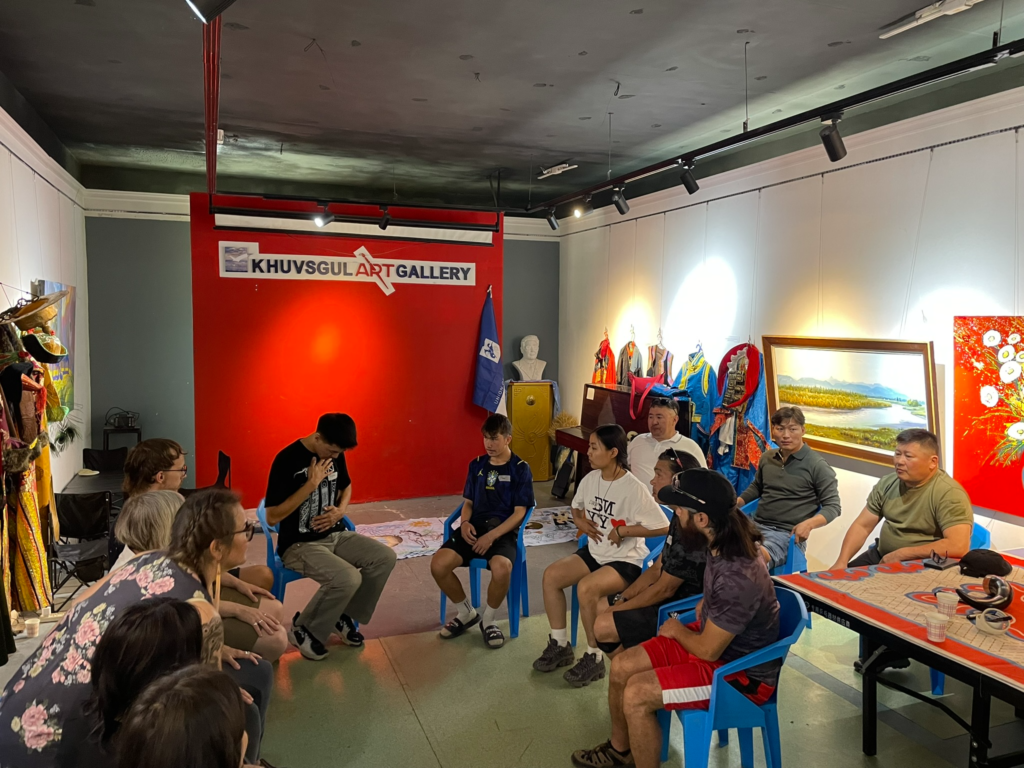
The second day centered on embodied cultural practice, beginning with Itelmen dance, song, and movement led by Lidia Kruchinina. Participants continued throat singing practice, took part in a river walk, contributed to the collective blanket, and returned to calligraphy with Mongol Bichig and font co-creation activities.
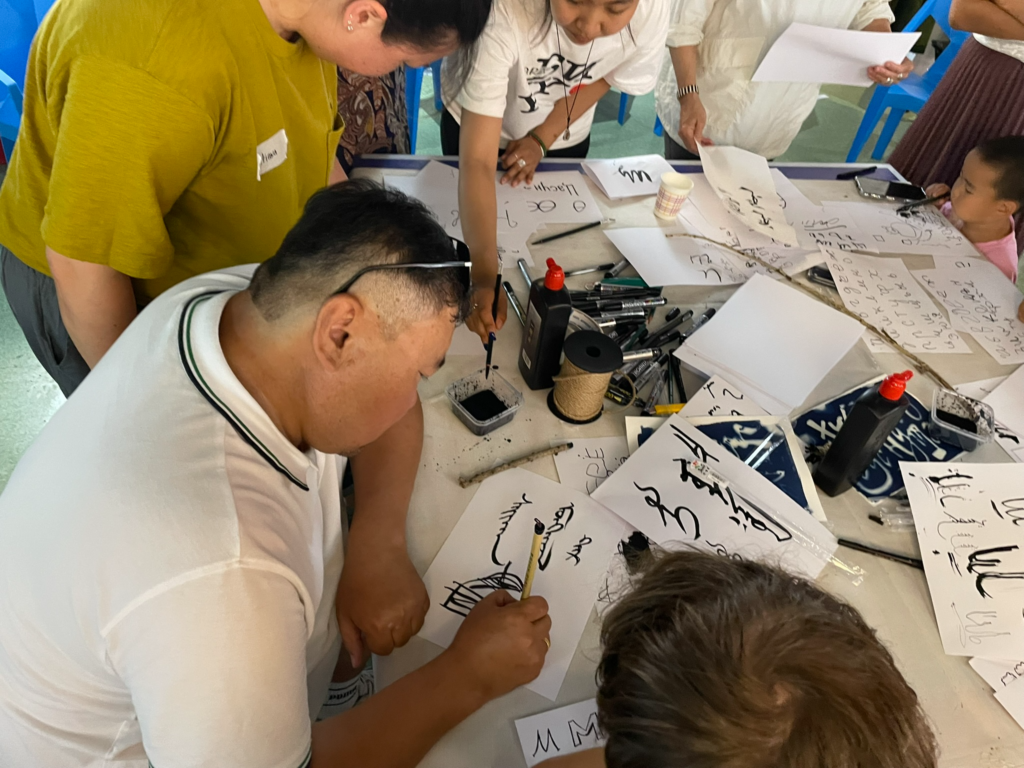
The third day featured presentations by Art Space Ujirit, work related to an Itelmen comic book and salmon skin practice, and co-creation of a song, Echoes of the Frozen, led by Bayarbaatar. Participants continued collective blanket work, deepening the workshop’s focus on shared artistic production and cultural meaning behind different depicted symbols. In addition, interested participants learned different beading techniques offered by Amber Webb and Lidia Kruchinina.
The final day included travel to Khatgal, filmed group performances, including collective dances and songs, and calligraphy performances.
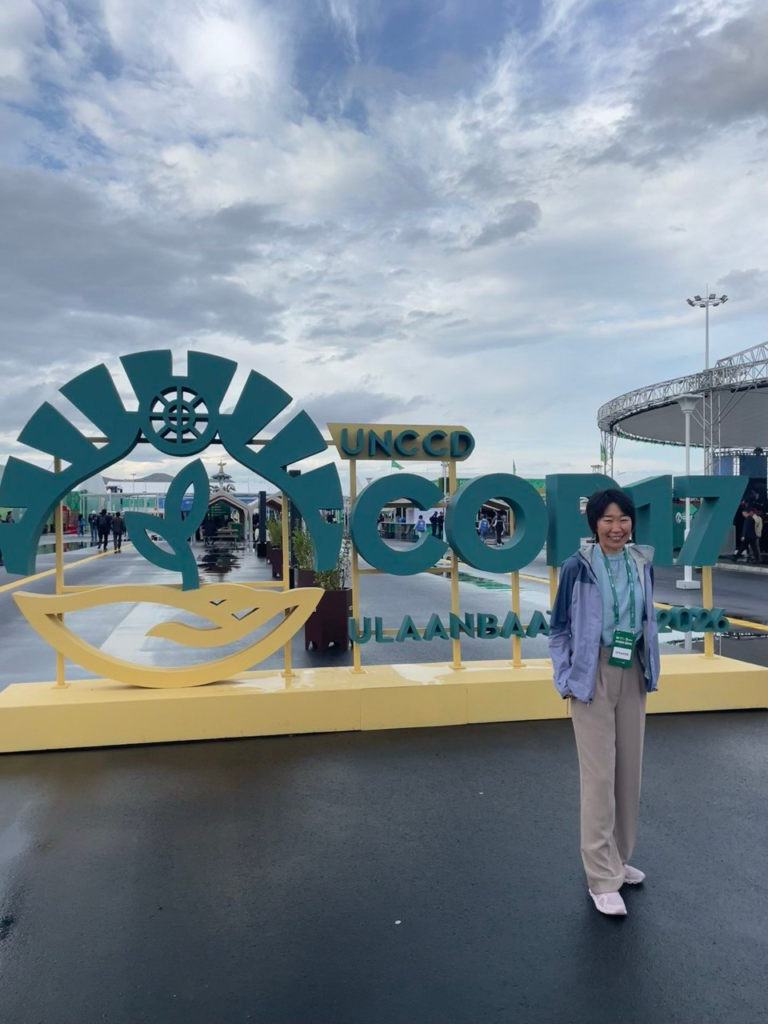
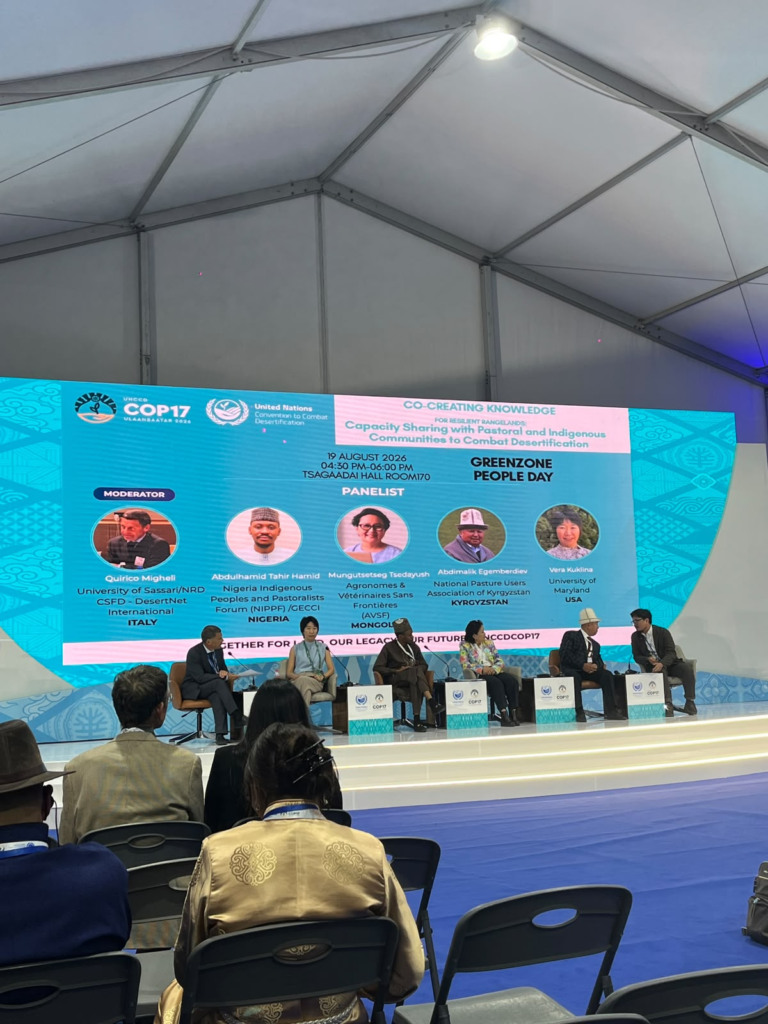
During the week on August 17-20, 2026, project members engaged in COP17 activities held in Ulaanbaatar. Vera Kuklina served as a speaker at the UNCCD event Co-creating knowledge for resilient rangelands on August 19. The event was facilitated by Quirico Migheli (University of Sassari – Desertification Research Centre, French Scientific Committee on Desertification, DesertNet International) and included speakers from different parts of the world: Abdimalik Egemberdiev (Chair, National Pasture Users Association of Kyrgyzstan – Kyrgyz Jayity), Mungutsetseg Tsedayush (Agronomes & Vétérinaires Sans Frontières AVSF), and Abdulhamid Tahir Hamid (Chair, Nigeria Indigenous Peoples and Pastoralists Forum – NIPPF).
Sharing experience from their countries and engaging in lively discussions, participants created a resolution to inform the UNCCD on the need to recognize diverse knowledge
systems, and support bottom-up initiatives from pastoralists.