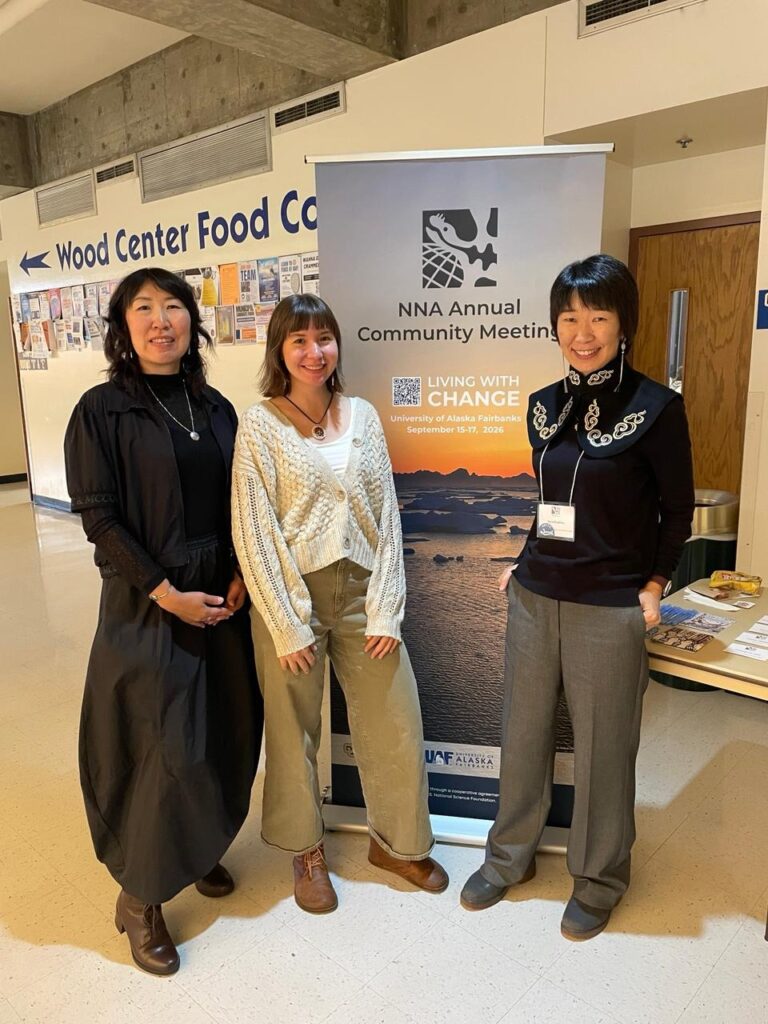
On September 15–17, 2026, the Frozen Commons team participated in the Navigating the New Arctic (NNA) Annual Community Meeting in Fairbanks, Alaska.
The 2026 NNA Annual Community Meeting brought together NNA researchers and project partners, representatives of Arctic Indigenous communities and organizations, decision-makers, educators, and others working across the Arctic. The meeting provided a space to share research outcomes and community research priorities, exchange lessons learned, and discuss future opportunities for collaborative and use-inspired Arctic research.
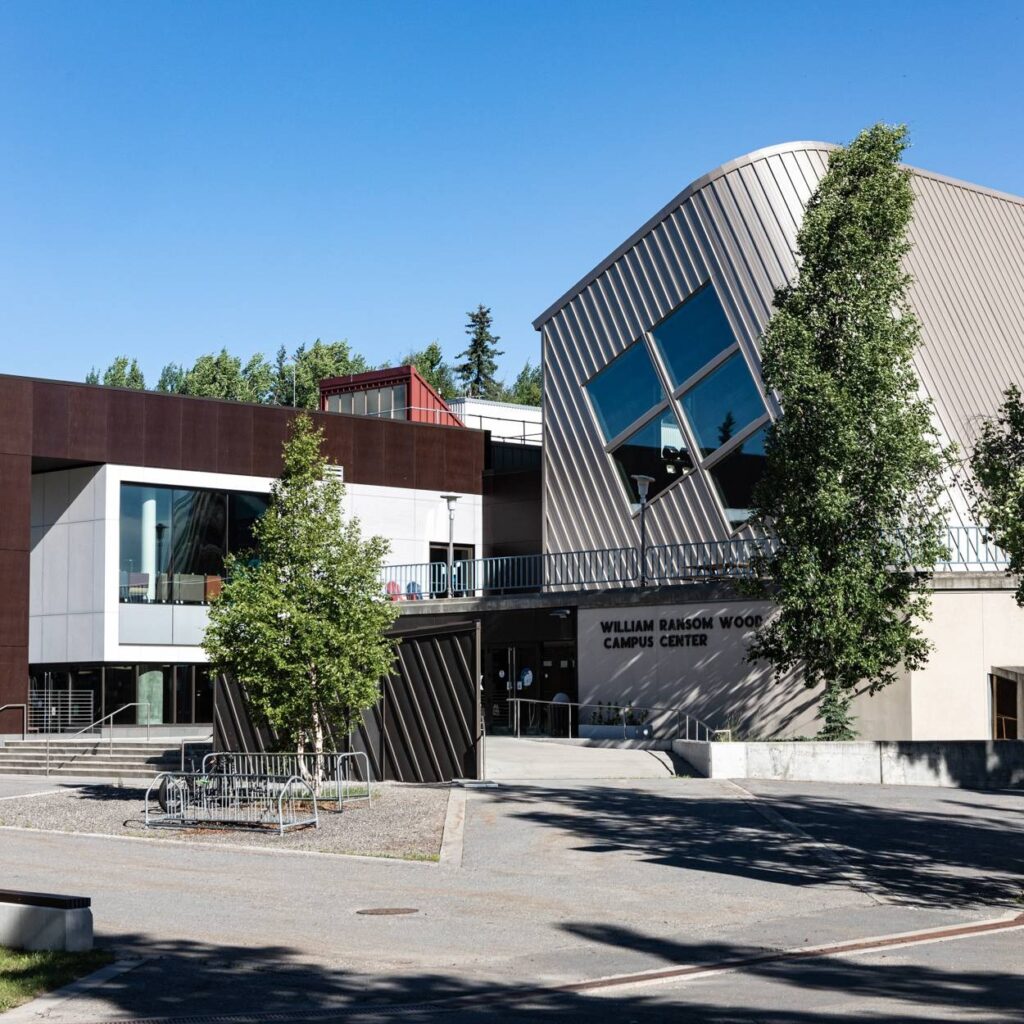
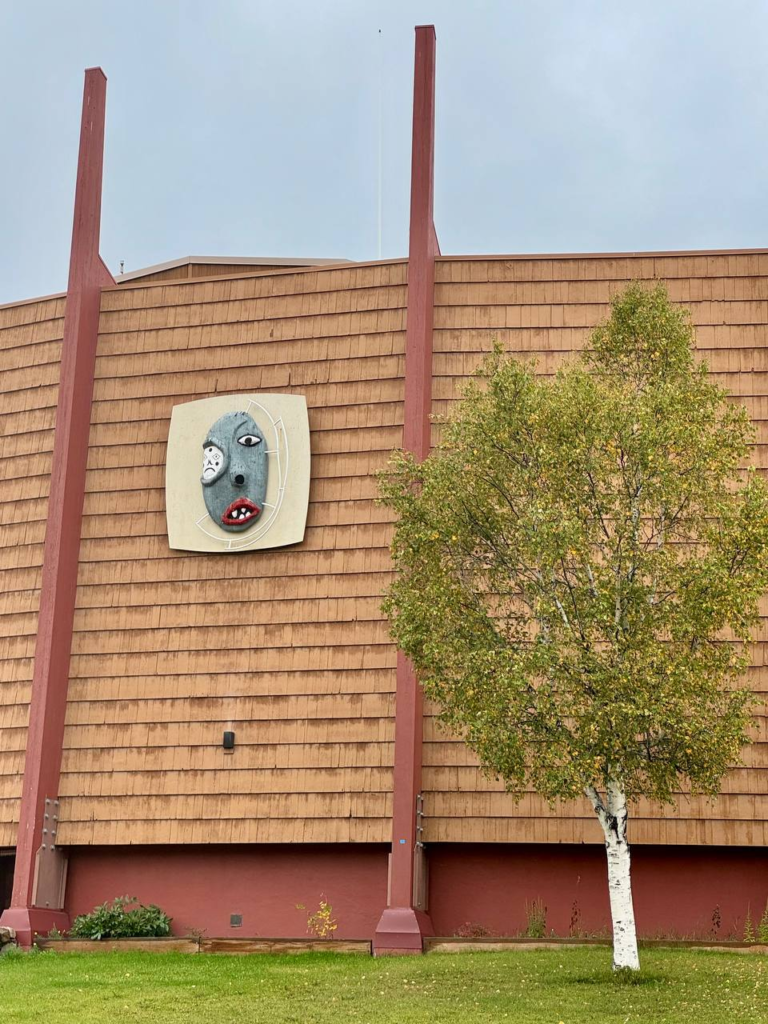
The NNA Community Office and UAF hosted this year’s meeting at the Wood Center on the University of Alaska Fairbanks (UAF) campus.
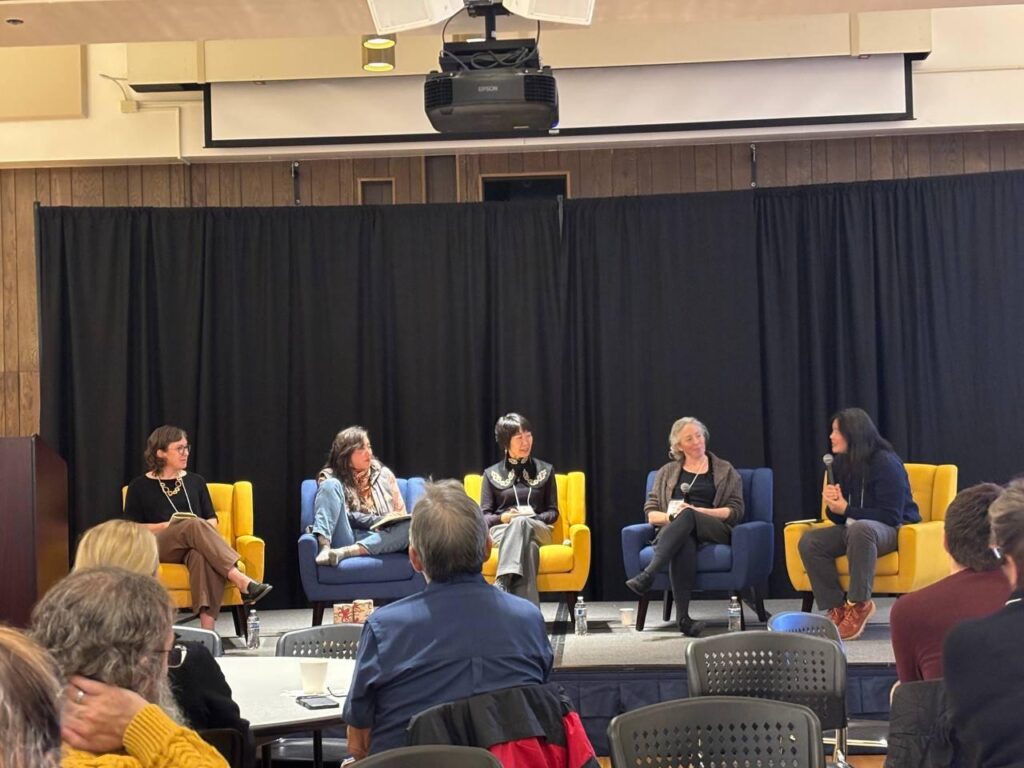
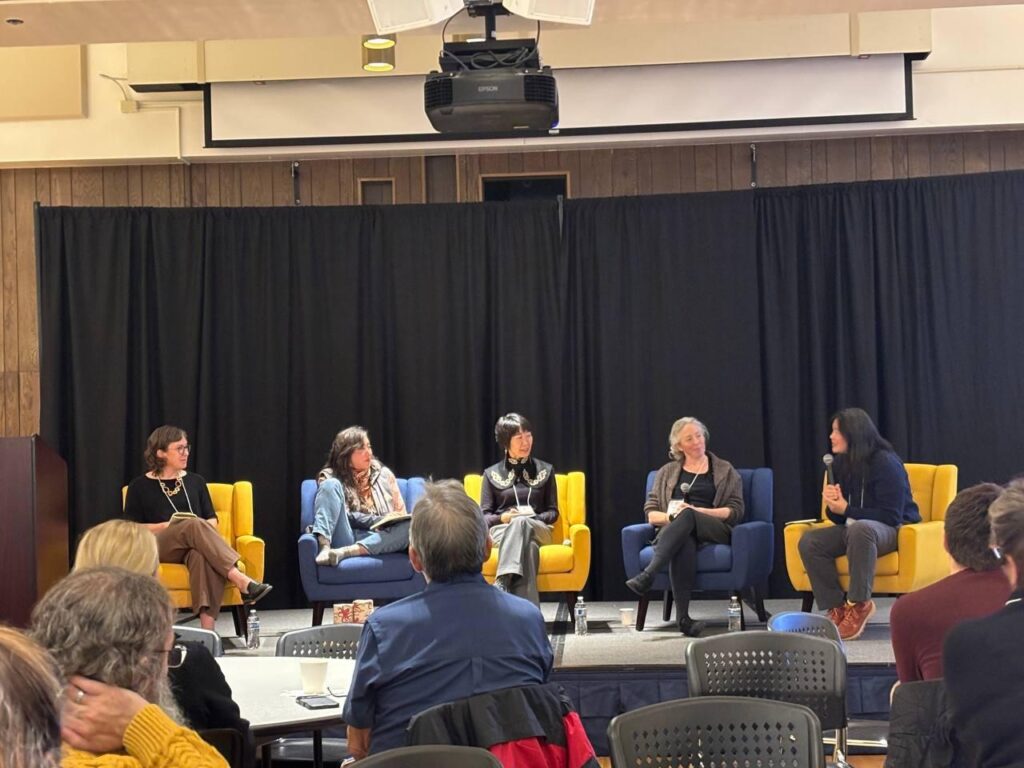
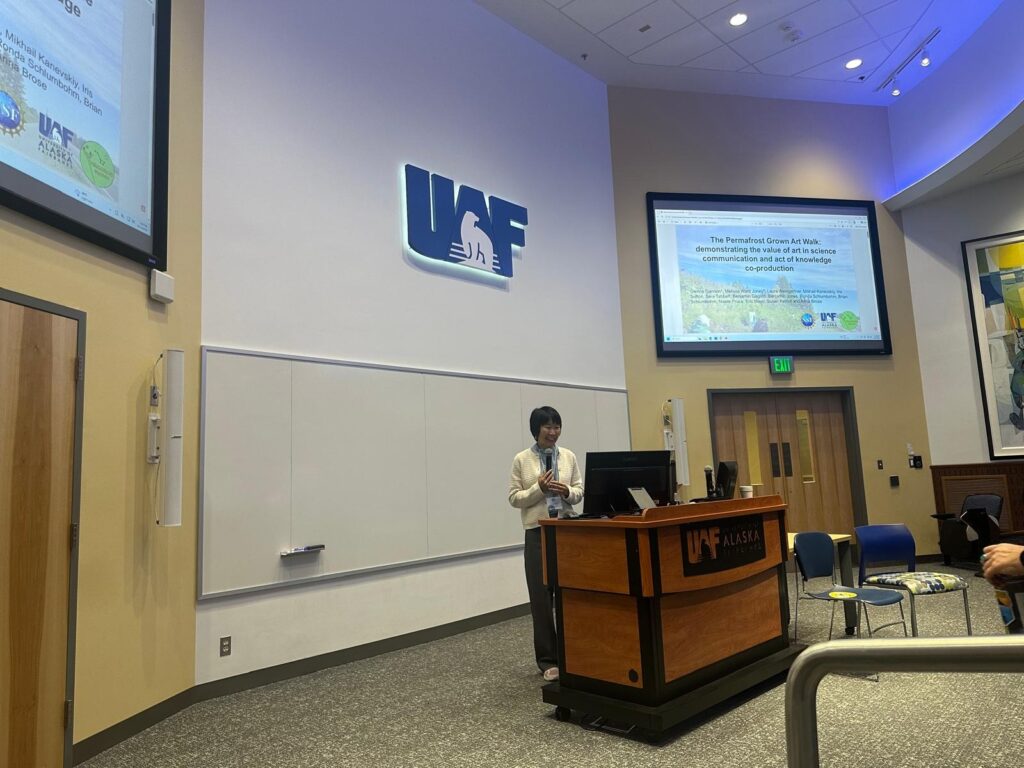
Vera Kuklina joined the panel “Impactful Communication and Dissemination of Research Results to Arctic Residents & Decision-Makers,” alongside Meghan Holtan, Cana Itchuaqiyaq, Kirsty Tinto, and moderator Allison Fong.
The panel focused on the importance of effective communication in convergence research and the co-production of knowledge. Participants discussed strategies for engaging Arctic residents and decision-makers at different stages of a research project, as well as creative approaches to sharing research outcomes in ways that respond to the needs and interests of communities and decision-makers. Drawing on examples from a range of Arctic research projects, the panelists reflected on both successful approaches and challenges encountered in communicating research.
Vera Kuklina shared experiences from the Frozen Commons project, focusing in particular on the organization of photovoice workshops and their role in collaborative research and the co-production of knowledge.
Humanizing and Indigenizing Research Practices in the “New” Arctic
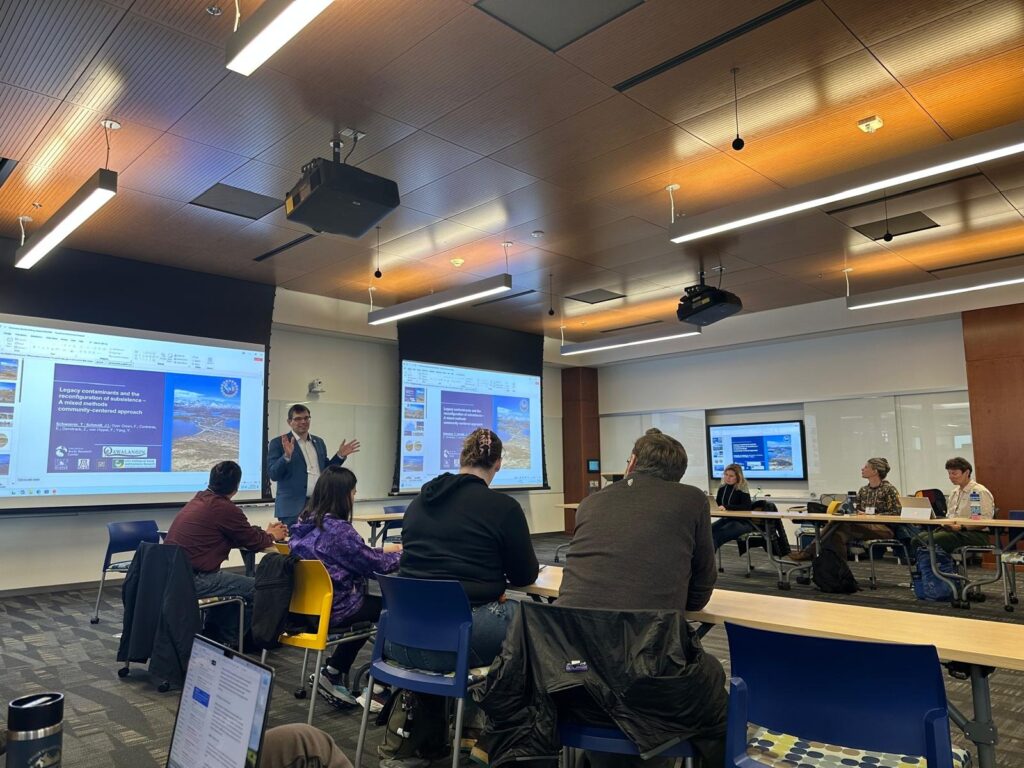
Andrey Petrov convened the session “Humanizing, Indigenizing Research Practices in the ‘New’ Arctic,” which brought together research grounded in community experience, Indigenous knowledge, and changing relationships with Arctic environments.
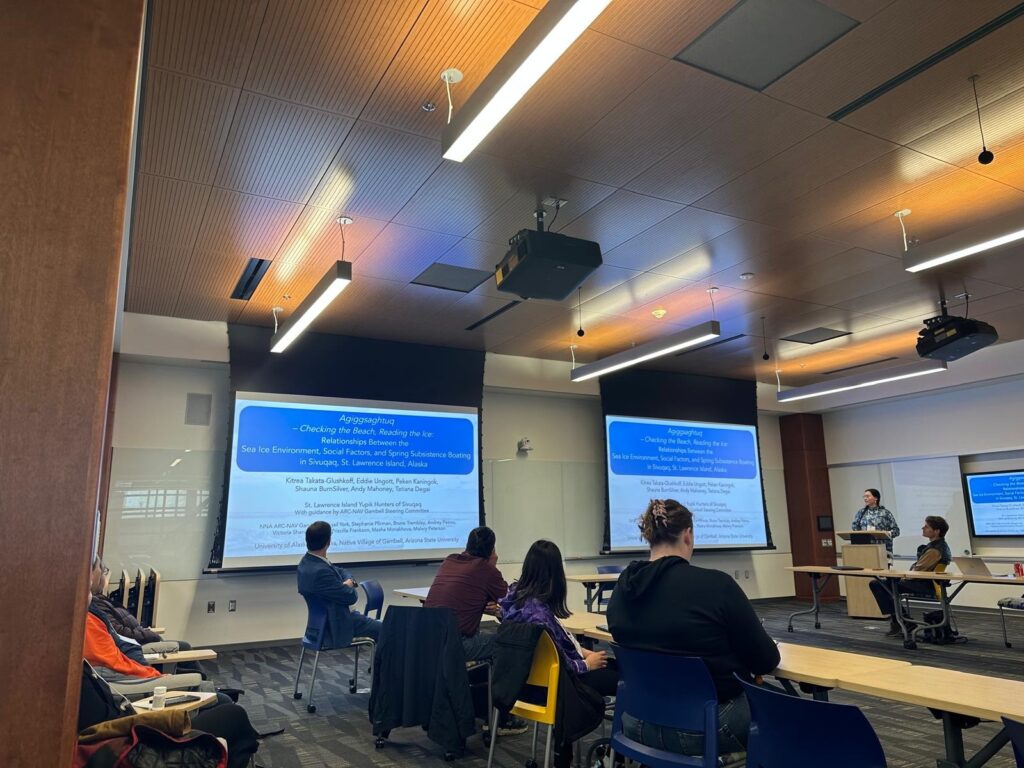
Kitrea Pacifica Takata-Glushkoff shared her research in the presentation “Agigghsaghtuq—Checking the Beach, Reading the Ice: Relationships between the Sea Ice Environment, Social Factors, and Spring Subsistence Boating in Sivuqaq, St. Lawrence Island, Alaska.” Her presentation examined relationships between sea ice conditions, social factors, and spring subsistence boating practices.
Tobias Schwoerer presented “Perceptions of Legacy Contamination and the Reconfiguration of Subsistence Practices on Unalaska Island, Alaska,” exploring how perceptions of environmental contamination intersect with changing subsistence practices and community relationships with local landscapes.
Restoring Epistemic Justice through ArtSLInK
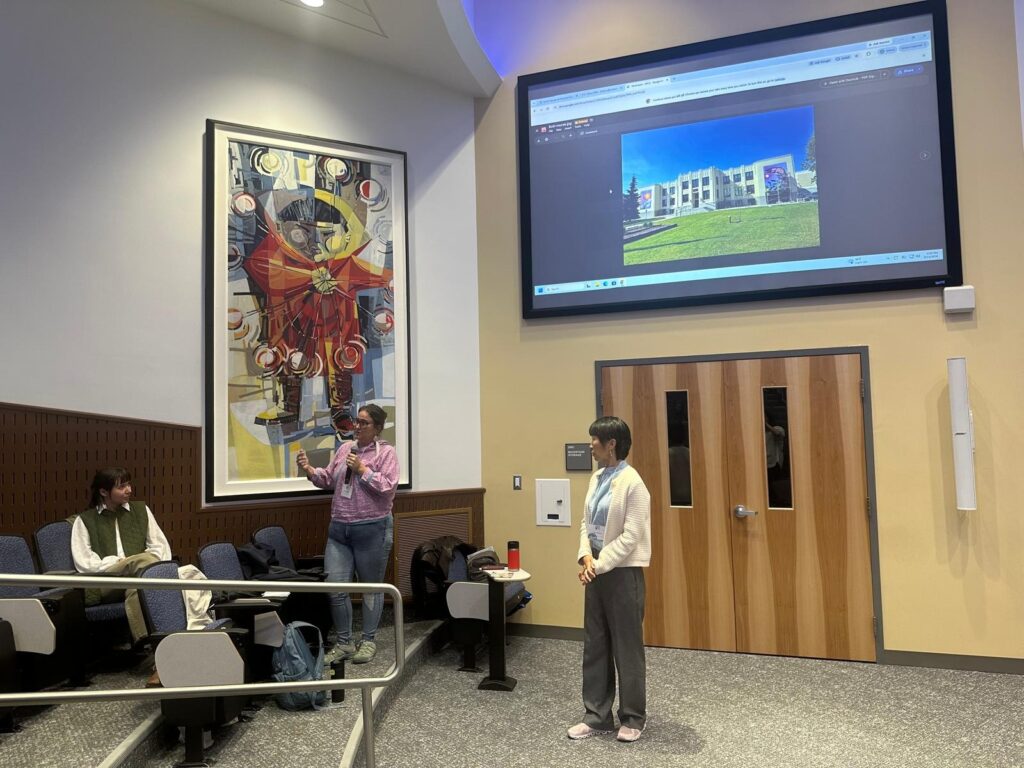
Building on the experience of the ArtSLInK (Arts, Science, Local and Indigenous Knowledge) initiative, Vera Kuklina convened the session “Restoring Epistemic Justice through ArtSLInK Co-Creative Practices.”
The session focused on the long-standing underrepresentation of Indigenous and artistic ways of knowing in research and funding structures. Indigenous knowledge systems have often been marginalized within academic scholarship, while the arts—despite their crucial role in interpersonal, intergenerational, and intercultural knowledge transmission—are still frequently treated primarily as tools for communicating research rather than as integral forms of knowledge production.
Participants considered epistemic justice through the recognition of diverse ways in which knowledge can be generated, interpreted, and shared, and discussed how such approaches can strengthen convergence research. The session emphasized that more equitable research practices require collaboration among decision-makers, researchers, Indigenous knowledge holders, artists, and communities.
Rather than relying only on conventional formats of academic exchange, the session invited participants to experiment with creative methods of knowledge sharing and co-creation and to exchange experiences of working across different knowledge systems.
As part of the session, Mariia Kuklina shared her experience of conducting photovoice workshops in Khovsgol Province, Mongolia. The workshops created opportunities for community members to tell their own stories and communicate their perspectives, including for participants with limited prior experience in storytelling, photography, or visual arts.
Within the Frozen Commons project, photovoice was used to bring community and research perspectives into dialogue and to explore lived experiences of snow, ice, and permafrost and their role in nomadic life. The method also offered a way to visually document these relationships, celebrate local cultures, and communicate concerns identified by partner communities in Mongolia. These materials can further contribute to the documentation of frozen landscapes and human–environment relationships.
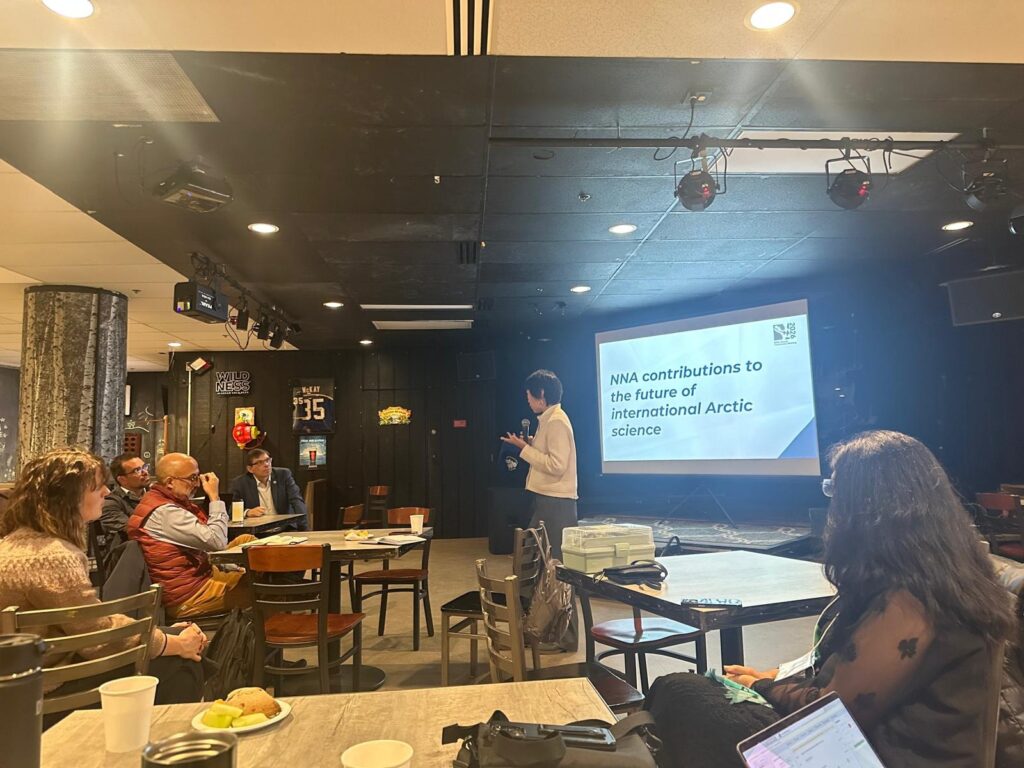
NNA Contributions to the Future of International Arctic Science
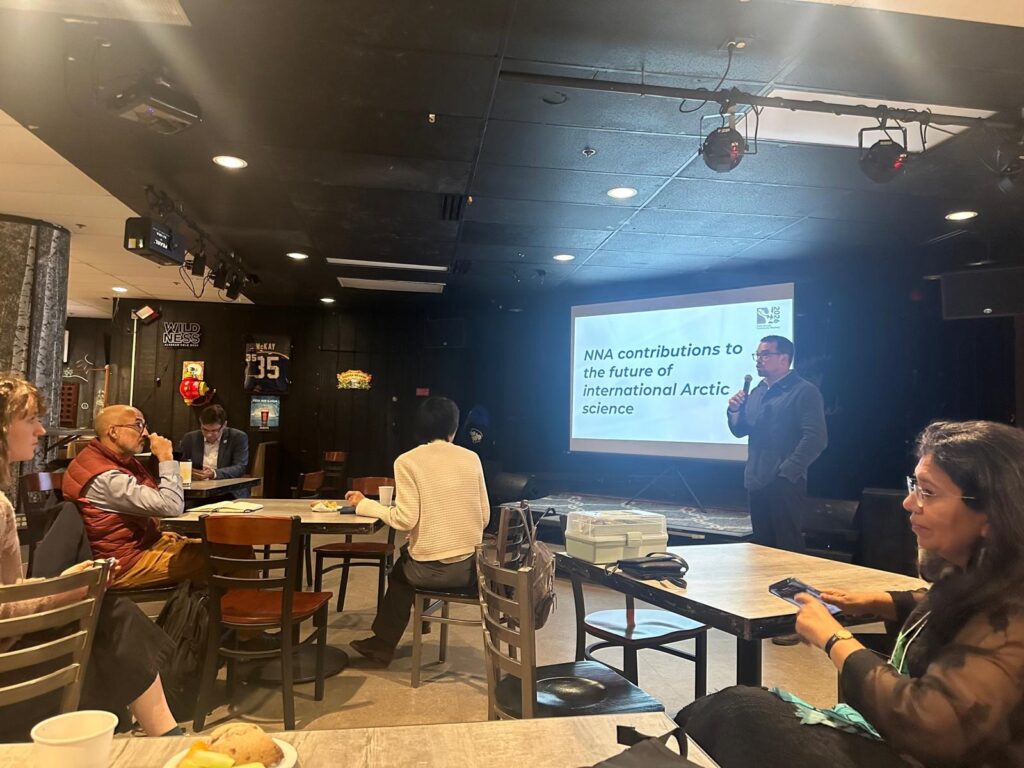
Looking beyond the NNA program toward the next phase of international Arctic research, Andrey Petrov convened the session “NNA Contributions to the Future of International Arctic Science.”
Led by U.S. delegates to the International Arctic Science Committee (IASC), the workshop explored how NNA-funded projects and researchers can contribute to emerging international Arctic science priorities, particularly those connected with the Fourth International Conference on Arctic Research Planning (ICARP IV) and the upcoming International Polar Year (IPY-5).
NNA researchers have already contributed across the ICARP IV Research Priority Teams and participated in IASC and ICARP initiatives, including the ICARP IV Summit in Boulder, Colorado, in March 2025 and the Arctic Science Summit Week Indigenous Pavilions at ASSW-2025 and ASSW-2026. Building on this experience, the session panelists discussed how U.S.-based researchers, communities, and partner organizations can remain actively engaged in international Arctic research planning and collaboration.
Speakers shared information about opportunities for participation in international Arctic research, invited feedback from participants, and facilitated a discussion on how researchers and communities can contribute to the planning and implementation of future initiatives while supporting meaningful knowledge exchange and co-creation. Particular attention was given to identifying practical pathways and funding mechanisms beyond the NNA program that could support participation in the International Polar Year and shape longer-term international research agendas.
Poster Session
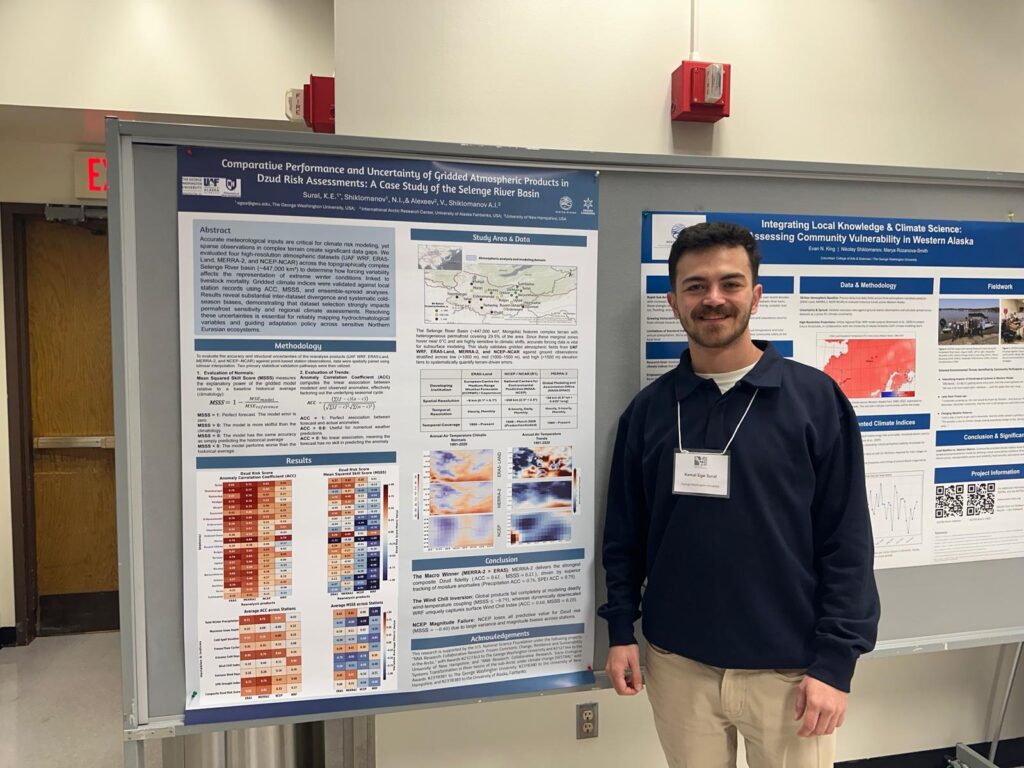
During the poster session, Ege Sural presented “Comparative Performance and Uncertainty of Gridded Atmospheric Products in Dzud Risk Assessments: A Case Study of the Selenge River Basin.”
The poster examined the performance and uncertainty of gridded atmospheric datasets used in dzud risk assessment, using the Selenge River Basin as a case study.
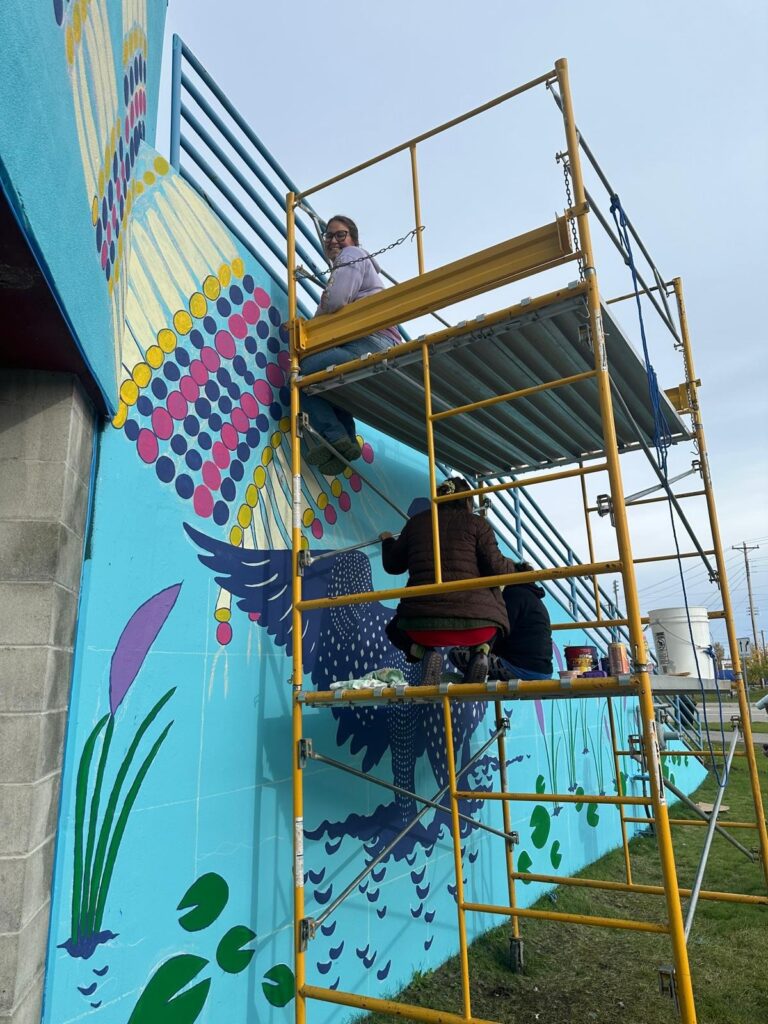
At the Frozen commons meeting we discussed the results of summer field works and plans for the next year : papers, conferences and others.
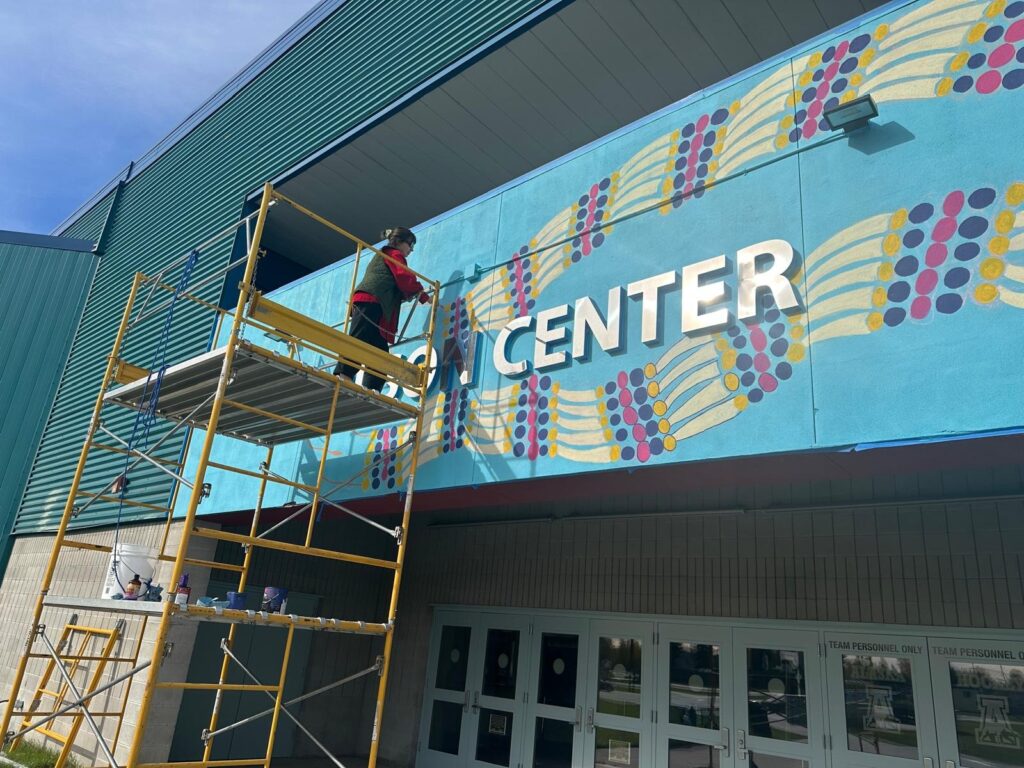
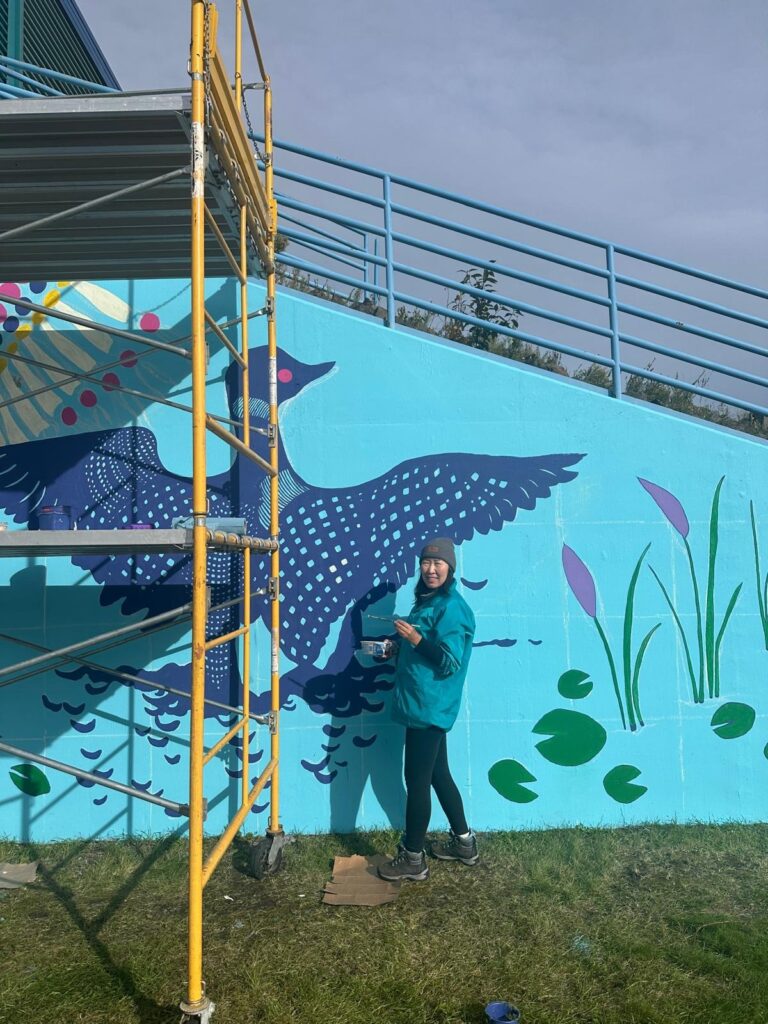
Also the Frozen commons team volunteered to create the Fairbank’s Carlson Center Mural. Amber Web is the lead artist working on the mural. She and her group collaborated with Denakkanaaga, the non-profit organization that serves as the voice for Interior Alaska’s elders on the mural.
Image Gallery
Photo by Mariia Kuklina, Diana Khaziakhmetova, Valentina Ekimova