- April 27, 2026
A five-day Regional Exchange on Indigenous Integrated Fire Stewardship Knowledge and Practices took place in Kathmandu, Nepal, from April 20 to 24, 2026, bringing together Indigenous leaders, practitioners, and researchers from 12 countries across the Asia sociocultural region. Organized by FAO’s Global Fire Management Hub and the International Indigenous-led Fire Adaptation Network (IIFAN), the workshop supported South–South learning and aimed to strengthen Indigenous-led approaches to sustainable fire management.
Wildfires have long been part of Indigenous Peoples’ relationships with land, ecosystems, and seasonal cycles. Today, however, climate change is increasing the frequency, intensity, and unpredictability of fires across many regions. In Arctic and sub-Arctic Asia, these changes are closely linked to permafrost degradation and shifting snow and ice seasons. Although experiences of wildfire in the Siberian taiga differ significantly from fire stewardship practices in Nepal, Thailand, Cambodia, India, and Bangladesh, workshop participants found common ground in shared values, spiritual relationships with the Land, and community-based responsibilities for care and adaptation.
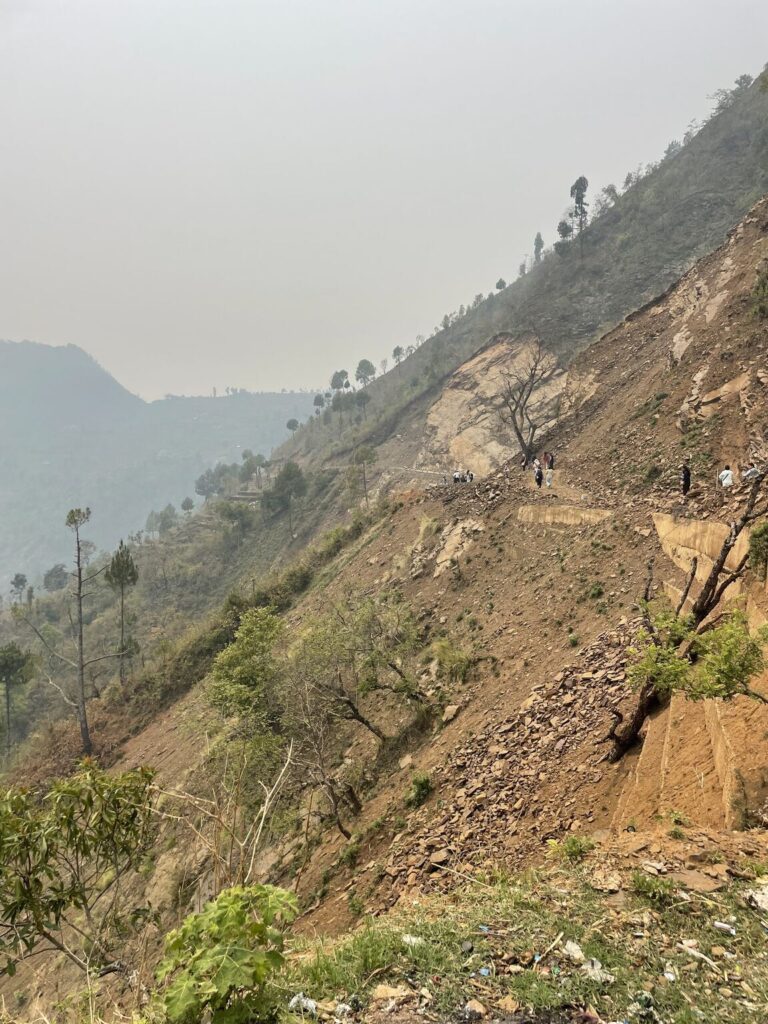
The program included a visit to the Chepang Indigenous community, where participants learned directly from local knowledge holders and the surrounding landscape about fire practices and place-based stewardship. The exchange contributed to the development of the emerging IIFAN network, helping to identify principles for sharing Indigenous fire knowledge across regions while respecting local protocols and knowledge sovereignty.
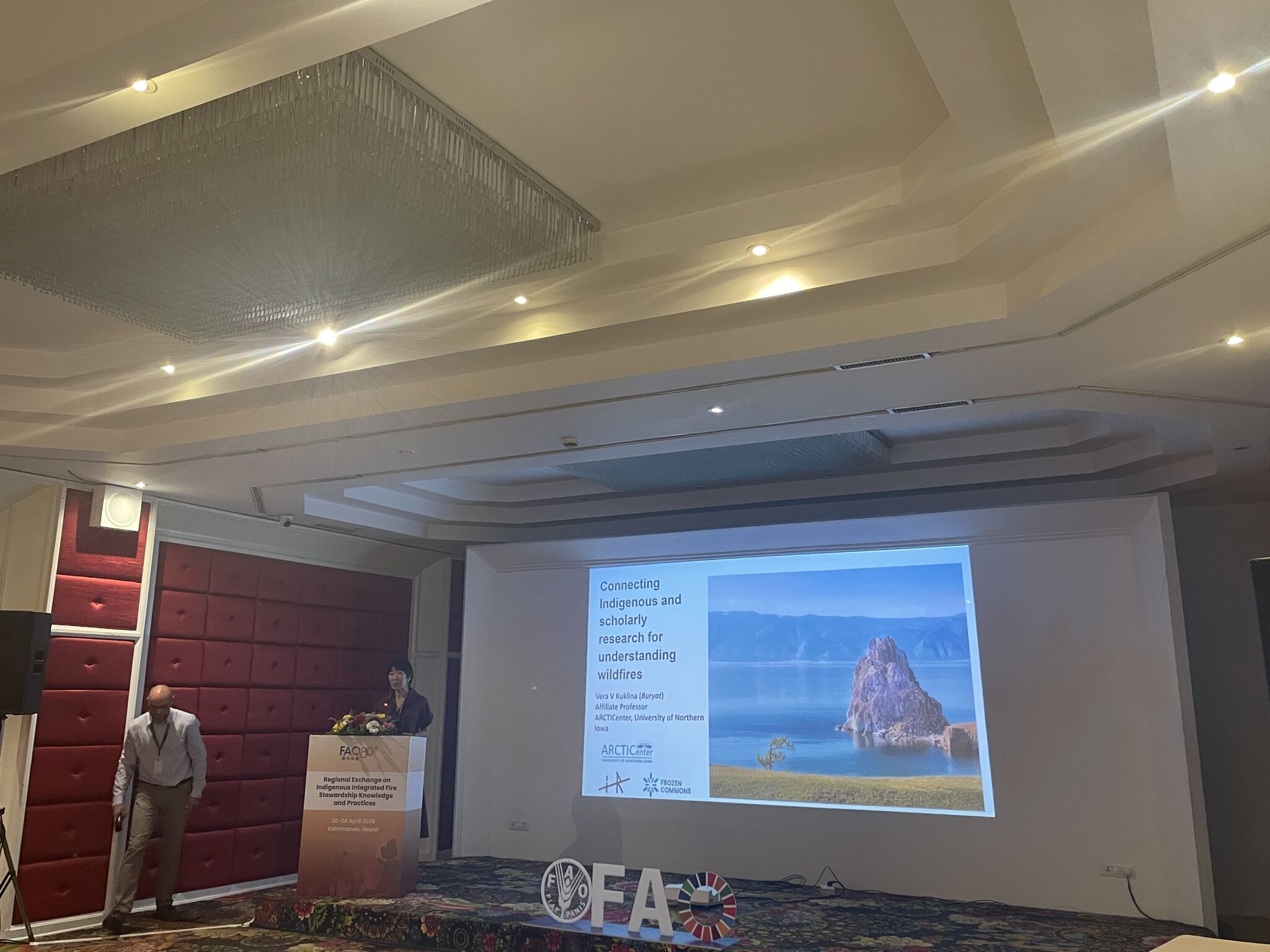
Buryat scholar Vera Kuklina presented “Connecting Indigenous and Scholarly Research for Understanding Wildfires,” showing how combining Indigenous knowledge with satellite data reveals critical insights into wildfire dynamics in Siberia. Her research demonstrates that informal roads can serve as significant ignition sources — in one study area alone, over 475,000 hectares burned. Community members helped identify “zombie fires” that smolder underground through winter and reignite in spring, and raised concerns about fire retardants contaminating berries, water, and other subsistence resources. Kuklina emphasized the importance of co-created research grounded in CARE and SHARE principles, accountable to Indigenous communities and responsive to their lived experience. Future directions include using AI and remote sensing to assess wildfire impacts on Indigenous infrastructure in Interior Alaska and other fire-affected northern regions.
Workshop on Indigenous fire stewardship in the Asia sociocultural region
in Kathmandu, Nepal, April 20-24, 2026
A five-day “Regional Exchange on Indigenous Integrated Fire Stewardship Knowledge and Practices” took place in Kathmandu, Nepal, from April 20–24, 2026, bringing together Indigenous leaders and practitioners from 12 countries across the Asia sociocultural region. Organized by FAO’s Global Fire Management Hub and the International Indigenous-led Fire Adaptation Network (IIFAN), the workshop facilitated south-south learning to promote Indigenous-led solutions for sustainable fire management.
Wildfires historically have been part of Indigenous Peoples’ relations with land. However, with climate change, their frequency and intensity are rapidly increasing. In the Arctic part of Asia, they are often the result of permafrost degradation and shrinking snow and ice seasons. On April 20-24, 2026, Vera Kuklina attended the Regional exchange on Indigenous fire stewardship in the Asia sociocultural region. Although the experience of studying and witnessing wildfires in the taiga differs significantly from fire stewardship practices in Nepal, Thailand, Cambodia, India, and Bangladesh, participants in the workshop were able to find common ground in values, spirituality, and relationships with the Land. The program included visiting the Chepang Indigenous community and learning from the local community and the landscape about their fire practices. The event was part of the Global Fire Management Hub – “Fire Hub”, launched in 2023 by the Food and Agriculture Organization of the United Nations (FAO) and the United Nations Environment Programme (UNEP). The workshop was aimed at contributing to the emerging international Indigenous-led fire adaptation network (IIFAN), for identifying principles and practices for sharing Indigenous knowledge about wildfires around the globe.
Buryat scholar Vera Kuklina presented “Connecting Indigenous and scholarly research for understanding wildfires,” showing how combining Indigenous knowledge with satellite data reveals critical insights about Siberian fires. Her research found that informal roads often serve as ignition sources, with over 475,000 hectares burned in a single study area. Community members helped identify “zombie fires” that smolder underground through winter and reignite in spring, and raised concerns about fire retardants contaminating berries and water. Kuklina advocates for co-created research following CARE and SHARE principles, and noted that future steps include using AI and remote sensing to assess wildfire impacts on Indigenous infrastructure in Interior Alaska.