
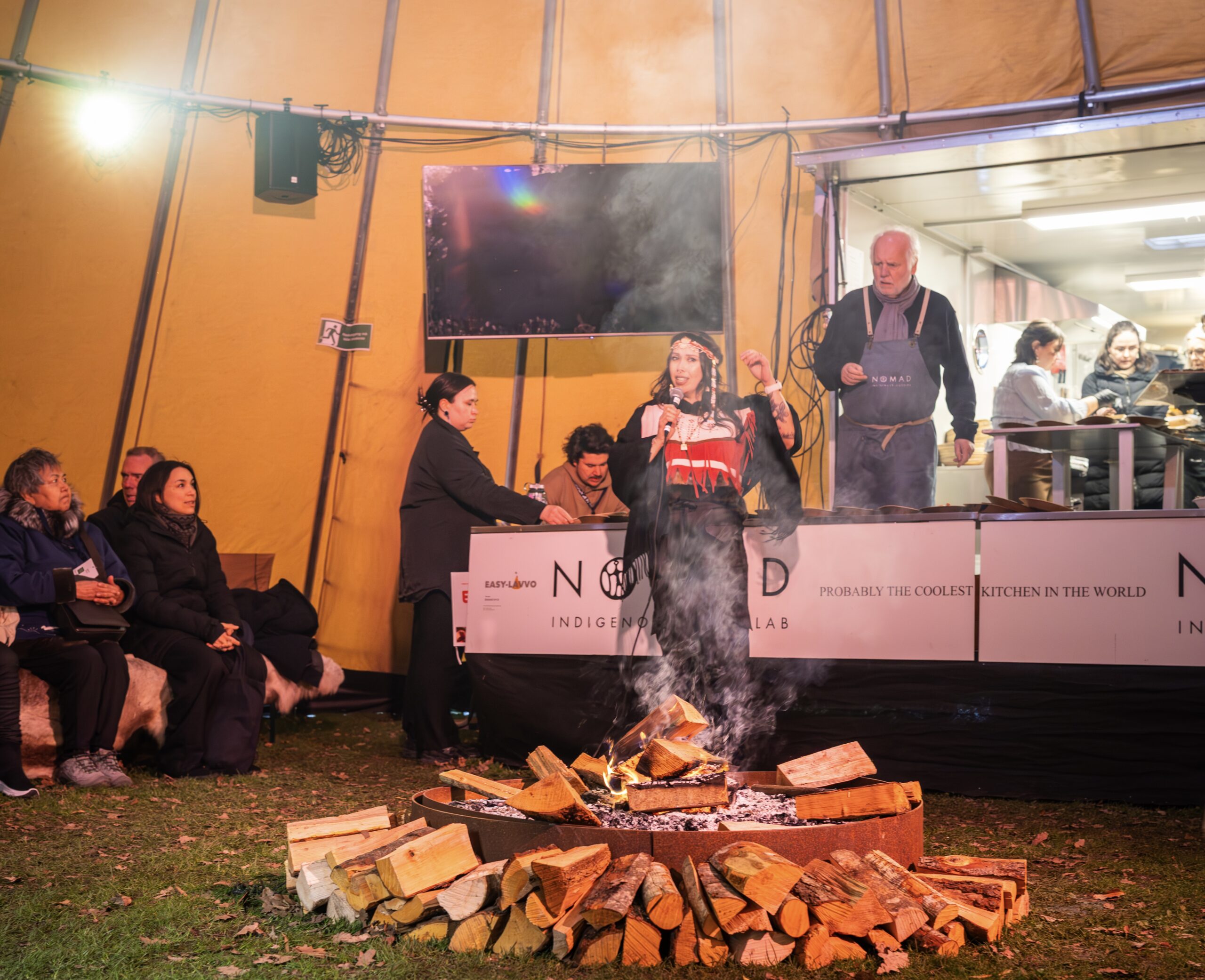
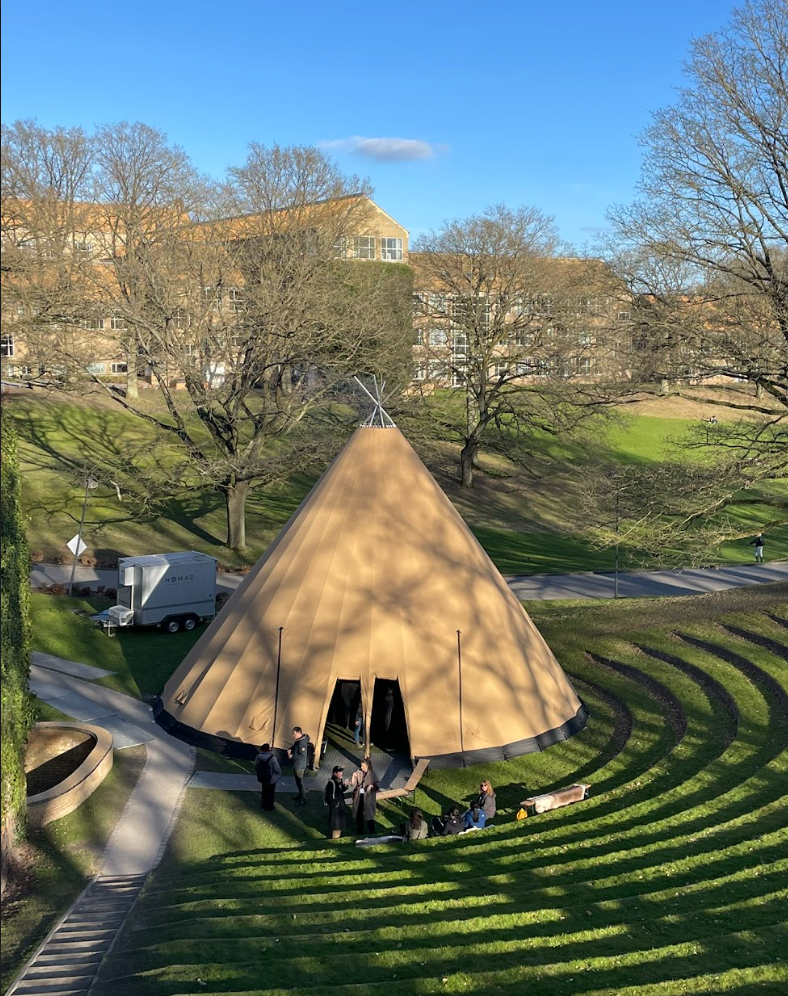
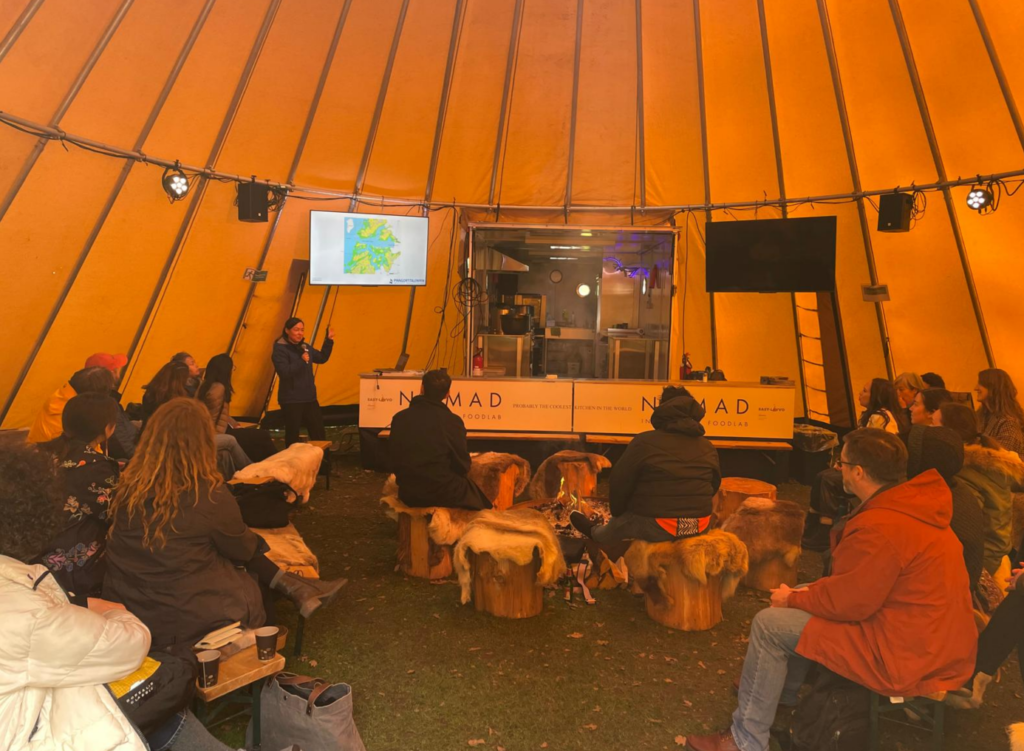
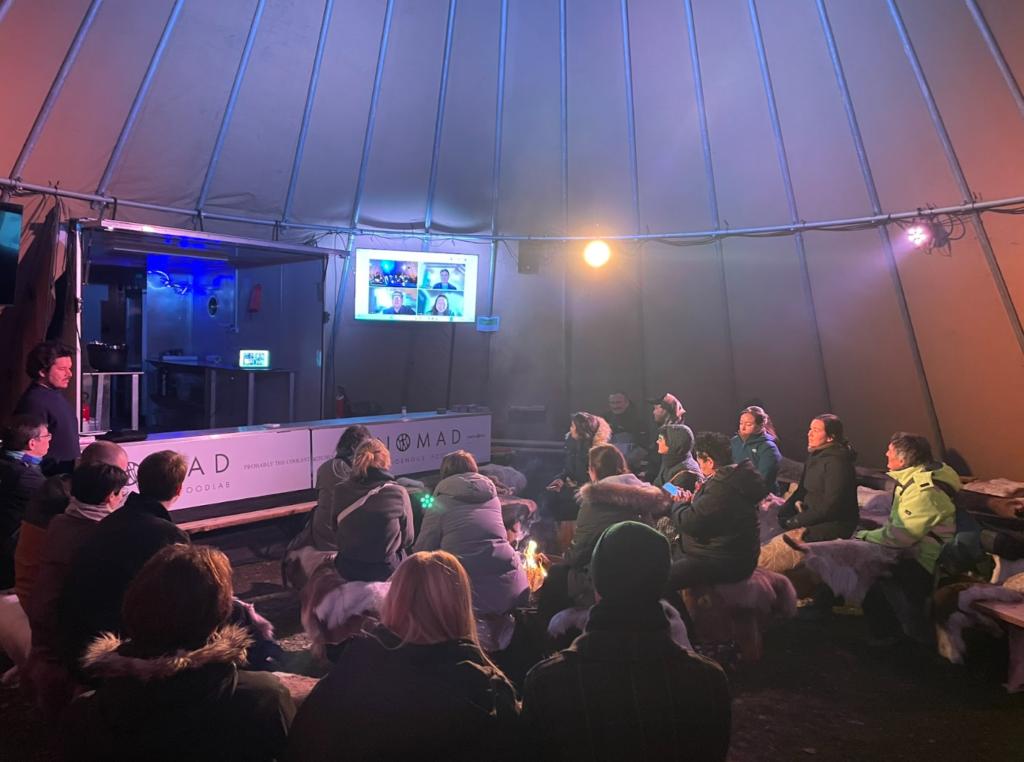
This year, Frozen Commons was again honored to contribute to the Indigenous Pavilion at the Arctic Science Summit Week in Aarhus, Denmark, on March 25 – April 1, 2026. Together with other colleagues, team members Vera Kuklina, Stanislav Saas Ksenofontov, and Mariana Marakhovskaia shaped the Pavilion’s program by celebrating Indigenous cultures, sharing knowledge with, and listening to Arctic Indigenous leaders, artists, and knowledge holders. The team members actively participated in the program by organizing meetings, discussions, sharing knowledge, and much more at the Lavvu space.
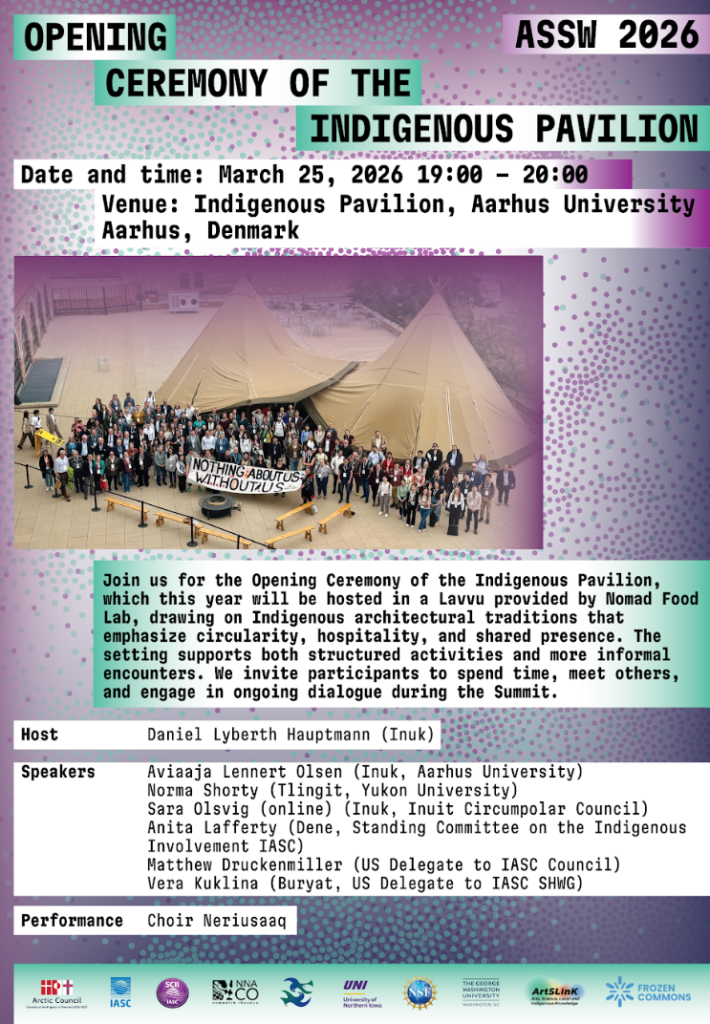
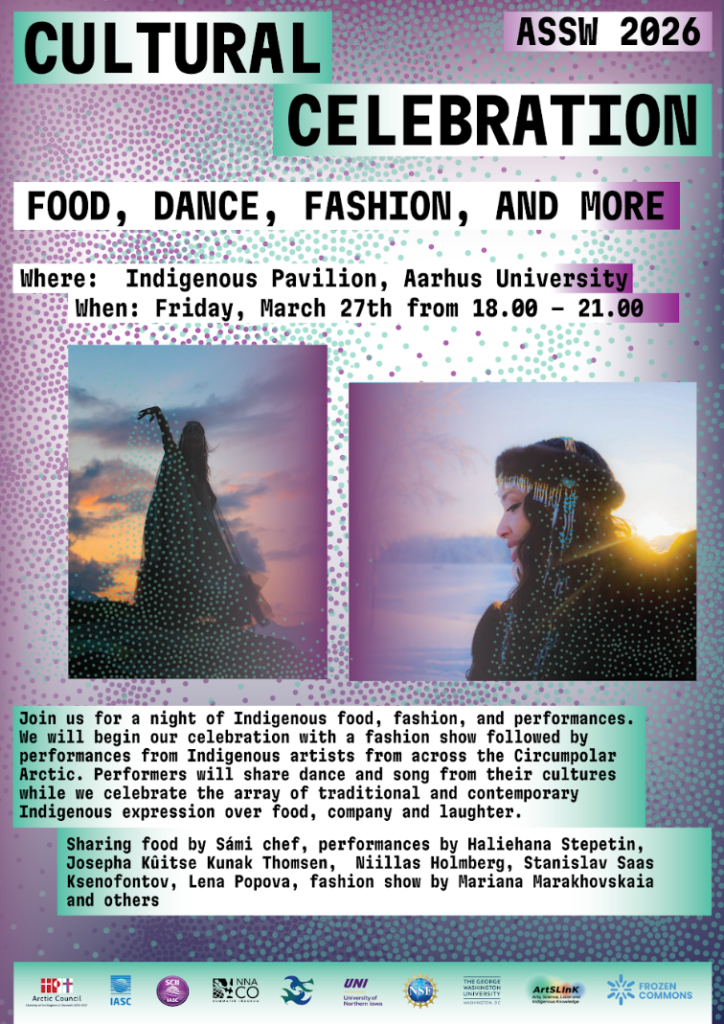
The poster and flyers of events in the Indigenous Pavilion were created by the FC team member Stanislav Podusenko.
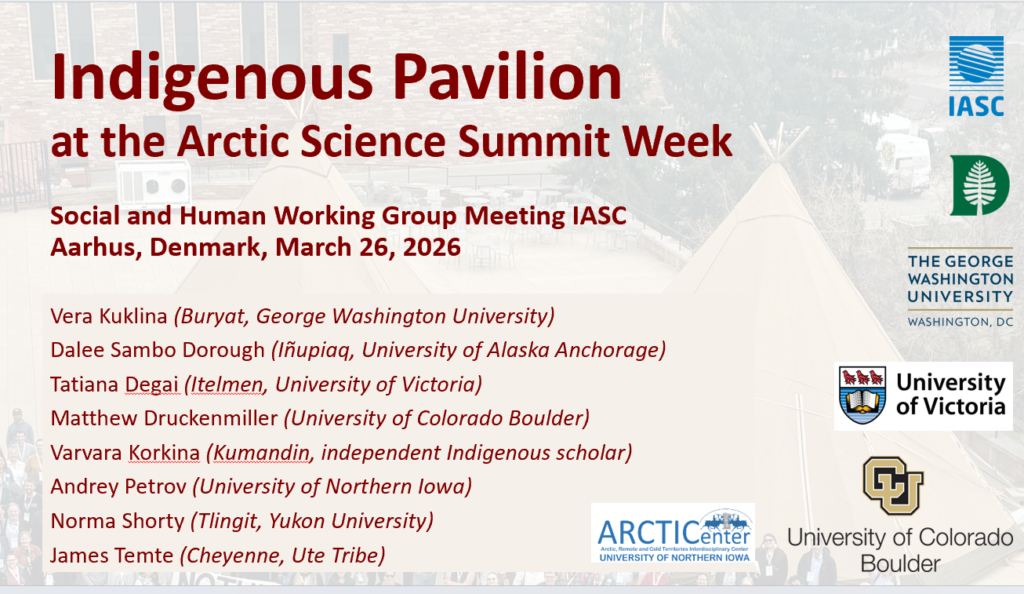
Lead PI Vera Kuklina gave a presentation at the Social and Human Working Group Business Meeting on March 26, reflecting on the joint experience of co-organizing the Indigenous Pavilion in 2025. Together with co-authors, she argued that the Pavilion has served as crucial infrastructure for meaningful and equitable knowledge sharing across different ways of knowing.
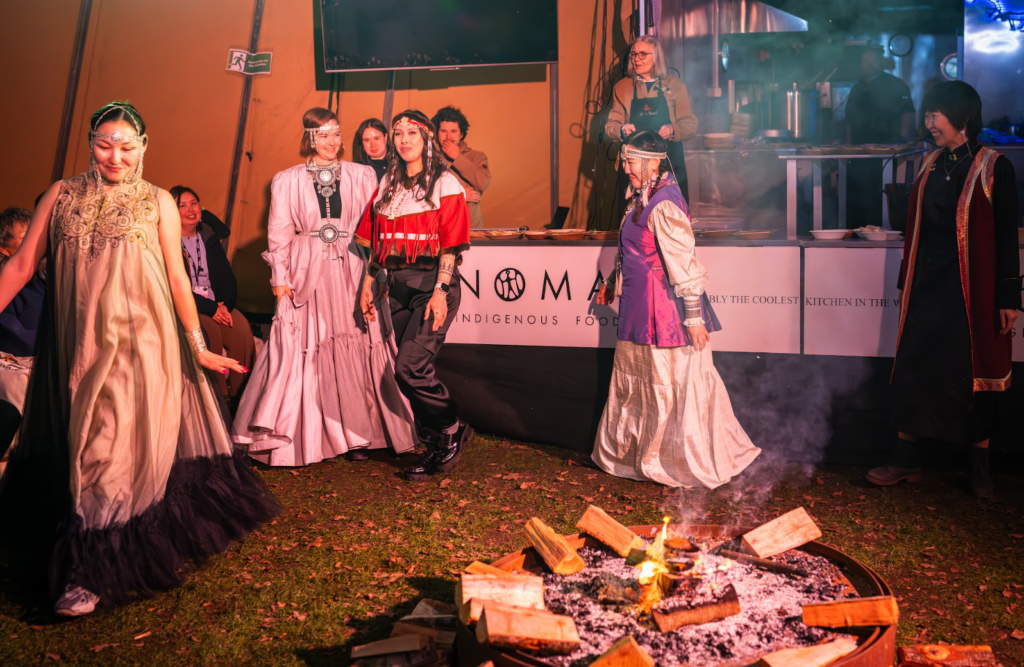
Vera Kuklina, with Haliehana Stepetin, Mariana Marakhovskaya, and Daniel Hauptmann, co-organized Cultural Celebration night on March 27 that included sharing food by Sámi chefs with the NOMAD Indigenous Foodlab, a fashion show of Sakha, Buryat, Nenets, and Unangax̂ clothing and regalia, with our PhD Candidate, Leah Shaffer stepping in as one of the models. The evening was highlighted by performances by Indigenous artists from across the Circumpolar Arctic: Josepha Kûitse Kunak Thomsen (Inuit), Lena Popova (Sakha), Mariana Marakhovskaia (Sakha), Haliehana Stepetin (Unangax̂), Niillas Holmberg (Sámi).
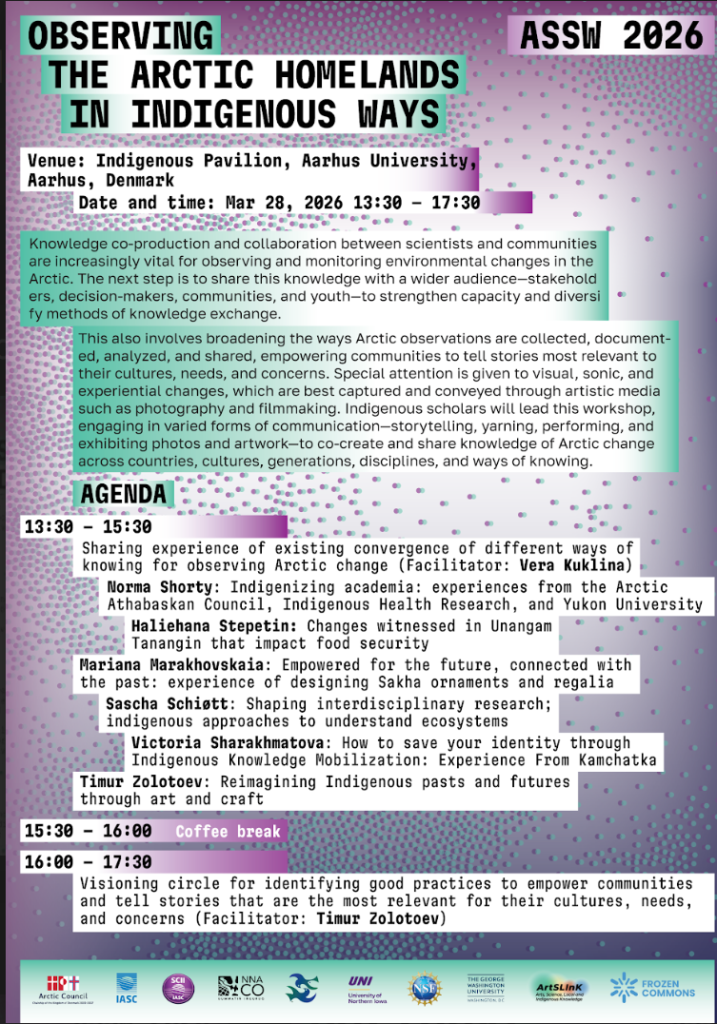
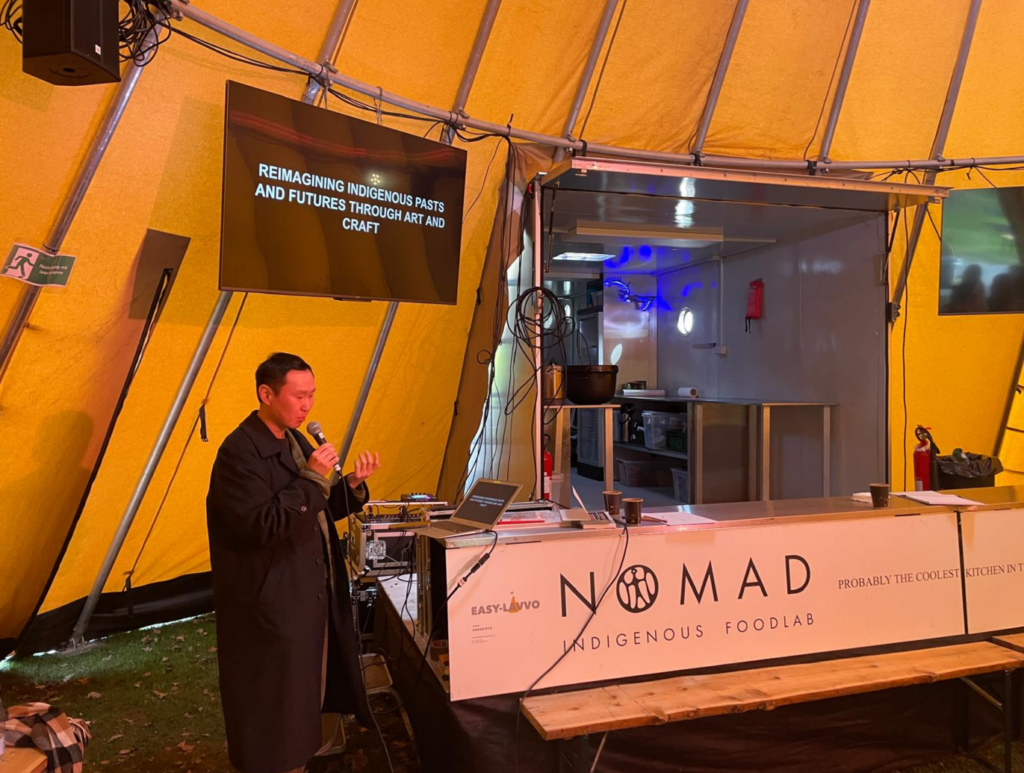
Observing the Arctic Homelands in Indigenous Ways workshop was organized by the project team on March 28. Knowledge co-production and collaboration between scientists and communities are increasingly vital for observing and monitoring environmental changes in the Arctic. The next step is to share this knowledge with a wider audience—stakeholders, decision-makers, communities, and youth—to strengthen capacity and diversify methods of knowledge exchange. This also involves broadening the ways Arctic observations are collected, documented, analyzed, and shared, empowering communities to tell stories most relevant to their cultures, needs, and concerns. Special attention is given to visual, sonic, and experiential changes, which are best captured and conveyed through artistic media such as photography and filmmaking. Indigenous scholars led this workshop, engaging in varied forms of communication—storytelling, yarning, performing, and exhibiting photos and artwork—to co-create and share knowledge of Arctic change across countries, cultures, generations, disciplines, and ways of knowing.
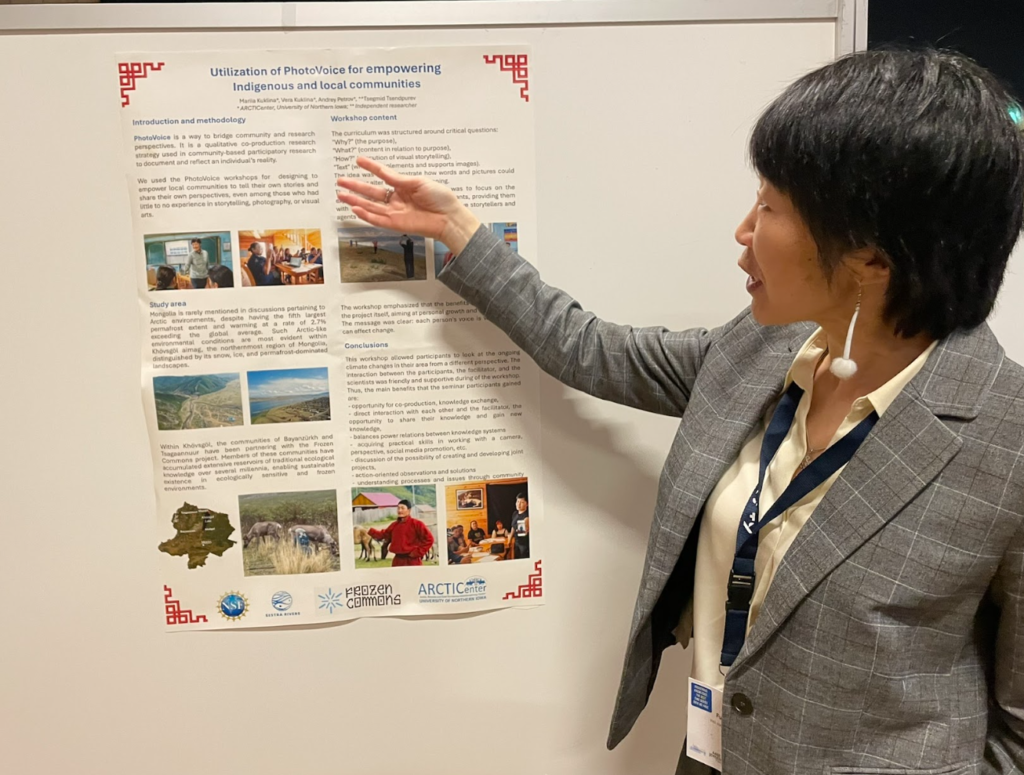
FC team members contributed to the Science Day on Mar 28, 2026 by presenting posters and giving talks.Mariia Kuklina, with co-authors, created a poster Utilization of PhotoVoice for empowering Indigenous and local communities, ” which was presented on March 29th.
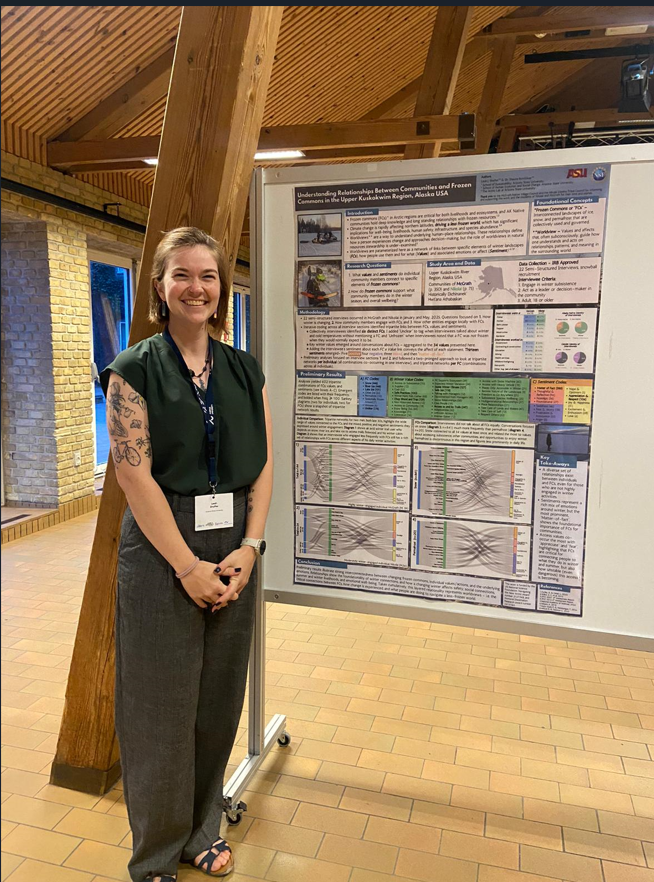
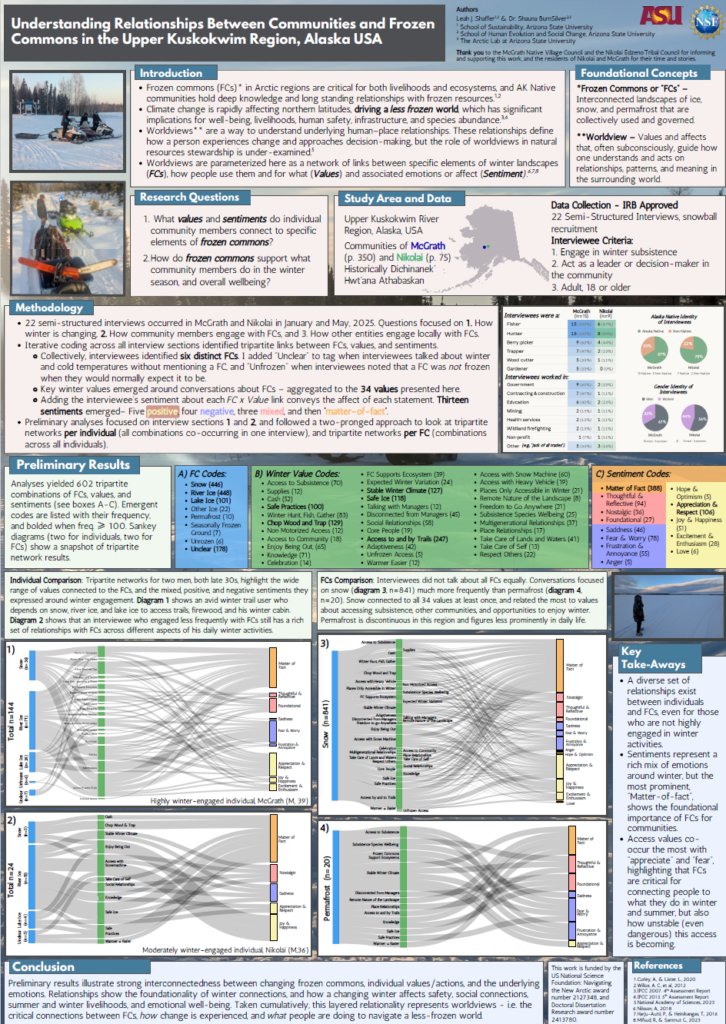
PhD Candidate Leah Shaffer presented a poster focused on understanding values and sentiments towards Frozen Commons expressed by residents of the project’s partner communities of Nikolai and McGrath, AK.
Stanislav Saas Ksenofontov with Roza Laptander (Nenets) organized a session on Indigenous Knowledge of climate change and adaptive strategies, which brought together Indigenous scholars from across the Arctic who shared their valuable perspectives on the matter. Stas also led screenings of the films created by Arctic filmmakers about the Arctic and the topics that they find most relevant on March 29. It included films by Svetlana Romanova (Even, Sakha), Hinkelten and Peter Vinokurov (Sakha) Invisible Threads. The screenings followed by questions, discussion, and conversations with filmmakers.
We believe that our joint effort led to recognition by the IASC of the Indigenous Pavilion as a permanent component of future Arctic Science Summit Weeks. This year’s Indigenous Pavilion was made possible by the Kingdom of Denmark’s Chairship of the Arctic Council, the International Arctic Science Committee (IASC), and the National Science Foundation-funded projects Navigating the New Arctic Community Office (award # 2040729) and Frozen Commons: Change, Resilience and Sustainability in the Arctic (award #2127343).